
Explore the Cutting – Edge World of PCB Technology!
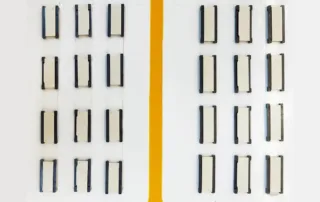
Experimental Study on Crimp Terminals for FPCB Connectors
With the continuous expansion of flexible printed circuit board (FPCB) applications, certain FPCBs now serve as connectors linking functional modules. Traditional FPCB plugs are prone to wear during connector interface insertion and removal, compromising electrical connection stability. Terminal crimping technology involves the sharp tip of the connector terminal piercing through the insulating material on both sides of the FPCB[...]
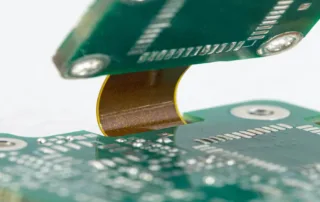
Advanced Analysis of Bump Crack Formation Mechanisms in FPCB Manufacturing
Flexible printed circuit boards (FPCBs) serve as the core components enabling flexible connections within electronic devices. To ensure optimal contact between certain specialized devices and other components, bump technology is employed on FPCB connection pads. Examples include applications such as the subscriber identity module (SIM) card slot in point-of-sale (POS) systems used for sales transactions, printer ink cartridges, and[...]
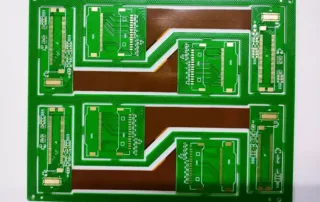
Boosting PCB and FPCB Heat Dissipation: Proven Engineering Methods
Author: YUShuhao, QUAN Haiyan PCB and FPGA have two completely different performance characteristics in terms of heat dissipation. Rigid PCBs—typically built with FR-4, high-TG laminates, or metal-core substrates—offer relatively strong thermal performance due to their thicker copper layers, stable structure, and the ability to incorporate heat-spreading features such as thermal vias, copper planes, and dedicated cooling interfaces. Flexible PCBs (FPCBs),[...]
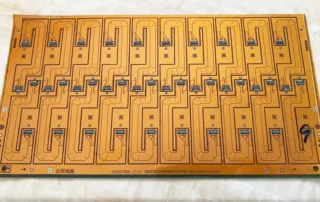
Why Components Fail on Nickel-Gold Plated FPC Boards: Causes and Insights
Before mounting components via SMT, manufacturers must treat the FPC surface and solderable component ends. This ensures solderability, connection reliability, and contact reliability. The surface treatment process significantly impacts SMT placement results and may lead to issues such as soldering defects and assembly failures. Nickel-gold plating serves as an effective surface treatment method. The gold layer prevents oxidation of[...]
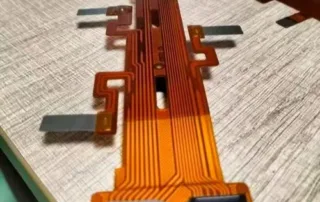
Cutting-Edge 3D Steel Sheet Assembly Technology for Flexible PCB Applications
With the rapid advancement of technology, flexible printed circuit boards (FPCBs) have gained widespread adoption in electronic devices due to their high flexibility, bendability, and lightweight yet durable characteristics. FPCBs play a pivotal role in automotive electronics, smart wearables, smartphones, aerospace, and other fields. However, as product designs grow increasingly complex and performance demands continue to rise, 3D steel plate[...]
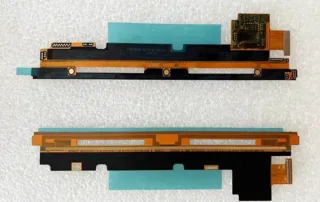
AI-Driven Optimization of Flexible Circuit Board Production Processes
With the trend toward thinner and lighter electronic products, flexible circuit boards have gained widespread adoption in smart terminals, wearable devices, and medical equipment due to their bendable nature and high space utilization. Flexible circuit board manufacturing faces challenges such as controlling material deformation, having narrow process windows, and significant environmental interference, making traditional fixed-parameter control methods inadequate for meeting[...]