
Explore the Cutting – Edge World of PCB Technology!
Flex PCB Manufacturing Explained: Materials, Layup Structures, and Production Processes
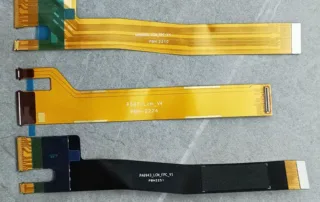
Printed Circuit Boards (PCBs) are the foundational building blocks of modern electronic systems, providing both electrical interconnection and mechanical support for electronic components. As electronic products continue to evolve toward higher density, thinner profiles, and more complex functional integration, PCB technologies have diversified to include rigid, flexible, and rigid-flex structures. Each PCB type employs carefully selected materials—such as copper[...]
What is the relationship between PCB trace width and current?
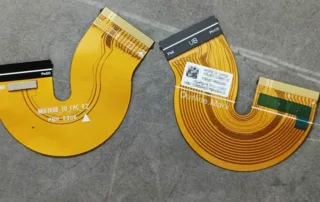
In PCB design, current-carrying capacity is one of the most misunderstood yet most critical parameters—particularly in power electronics, motor drivers, and high-current control systems. While signal integrity, impedance control, and EMC often receive significant attention, trace current capacity is frequently reduced to rough rules of thumb or “experience-based judgment.” This approach works—until it doesn’t. Unlike wires, PCB traces are[...]
Design of Automatic Assembly Equipment for Flexible Circuit Board
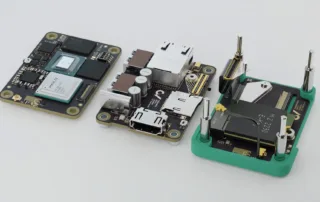
Flexible printed circuits (FPCs) are circuit boards featuring a substrate made of polyimide or polyester film, coated with conductive copper foil or conductive carbon ink [1]. Owing to their compact size, excellent bendability, lightweight nature, and high reliability [2], they have become indispensable components in smart consumer electronics. As electronic products like wearables, flexible displays, and smart devices evolve[...]
Optimizing Flexible PCB Design with Heuristic A* Algorithm for FPC Routing
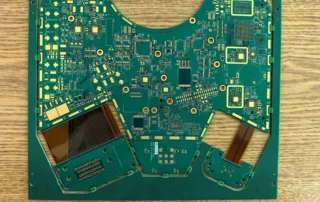
Modern electronic devices are trending toward thinner, lighter, and more highly integrated designs. Consequently, FPC design and the A* algorithm have emerged as key research directions for optimizing flexible circuit board routing. Flexible circuit boards (FPCs), valued for their bendability, compressibility, and high reliability, are widely adopted in consumer electronics and high-end electronic systems. However, their routing design demands[...]
Flex PCB: Basic Characteristics and types
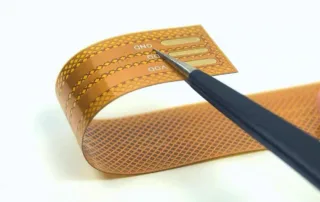
Flexible Printed Circuit Board (FPCB), commonly abbreviated as flexible board, also known as flexible circuit or soft board, is a bendable printed circuit board (PCB) and constitutes a major category within PCBs. Within the industry, some abbreviate FPCB as FPC. This is incomplete because “printed circuit” only represents part of the board and does not encompass the entire board. Therefore,[...]
Flexible PCB Material Stack-Up: Types, Functions, and Performance
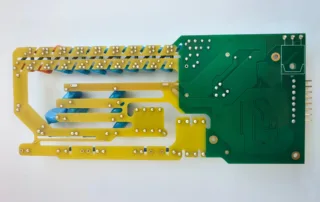
A printed circuit board (PCB) is defined as a functional board that provides point-to-point connection lines and printed component interconnections on an insulating substrate according to a predetermined design. A flexible printed circuit board (FPCB) is a functional board that forms printed circuits on a bendable, flexible insulating substrate. Its basic structure is shown in Figure 1. Figure 1[...]
Boosting PCB and FPCB Heat Dissipation: Proven Engineering Methods
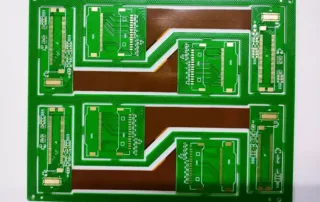
Author: YUShuhao, QUAN Haiyan PCB and FPGA have two completely different performance characteristics in terms of heat dissipation. Rigid PCBs—typically built with FR-4, high-TG laminates, or metal-core substrates—offer relatively strong thermal performance due to their thicker copper layers, stable structure, and the ability to incorporate heat-spreading features such as thermal vias, copper planes, and dedicated cooling interfaces. Flexible PCBs (FPCBs),[...]
Why Components Fail on Nickel-Gold Plated FPC Boards: Causes and Insights
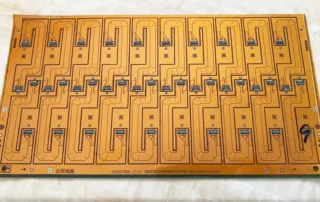
Before mounting components via SMT, manufacturers must treat the FPC surface and solderable component ends. This ensures solderability, connection reliability, and contact reliability. The surface treatment process significantly impacts SMT placement results and may lead to issues such as soldering defects and assembly failures. Nickel-gold plating serves as an effective surface treatment method. The gold layer prevents oxidation of[...]
Cutting-Edge 3D Steel Sheet Assembly Technology for Flexible PCB Applications
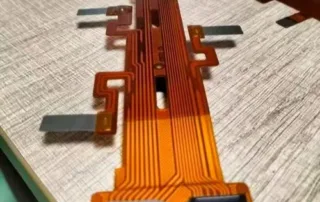
With the rapid advancement of technology, flexible printed circuit boards (FPCBs) have gained widespread adoption in electronic devices due to their high flexibility, bendability, and lightweight yet durable characteristics. FPCBs play a pivotal role in automotive electronics, smart wearables, smartphones, aerospace, and other fields. However, as product designs grow increasingly complex and performance demands continue to rise, 3D steel plate[...]
AI-Driven Optimization of Flexible Circuit Board Production Processes
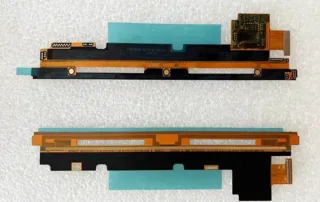
With the trend toward thinner and lighter electronic products, flexible circuit boards have gained widespread adoption in smart terminals, wearable devices, and medical equipment due to their bendable nature and high space utilization. Flexible circuit board manufacturing faces challenges such as controlling material deformation, having narrow process windows, and significant environmental interference, making traditional fixed-parameter control methods inadequate for meeting[...]
PCB Assembly Process: A Step-by-Step Guide
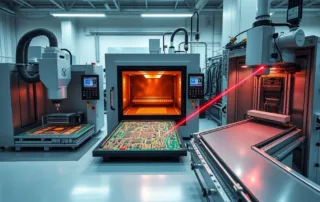
The PCB assembly process (often called PCBA) is the heartbeat of modern electronics manufacturing. Transforming a bare printed circuit board (PCB) into a functional electronic assembly requires precision, expertise, and rigorous quality control. To understand this process, you need to know more than just the steps. You must also see the key differences between assembling rigid boards and the special challenges of flex PCB assembly.[...]
Mastering SMT Assembly: Advantages and Future Trends
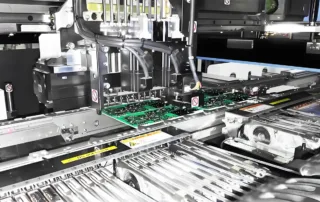
SMT assembly, or Surface Mount Technology (SMT) assembly, is now a key component of the rapidly evolving electronics industry. It has grown with the rise of modern circuit boards. Mobile phones and factory automation equipment use SMT technology. It offers high-density assembly and other benefits for PCB production. In this guide, we will explore the basics of SMT PCB assembly.[...]