
Explore the Cutting – Edge World of PCB Technology!
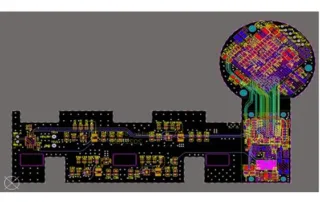
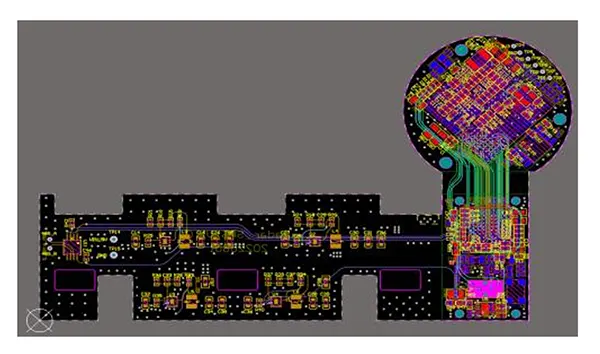
Flexible Electronics–Enabled RF Signal Processing Circuits for Miniaturized Missile Systems
With the widespread operational deployment of unmanned platforms, miniaturized, low-cost, and mass-produced munitions will become an inevitable trend in future weapons development. Therefore, designers must minimize the volume ratio of onboard electronic equipment, controlling it within 15% to 20% to reserve more space for warheads and propulsion systems. Miniaturization Challenges in Next-Generation Munitions However, traditional rigid circuit system structural[...]
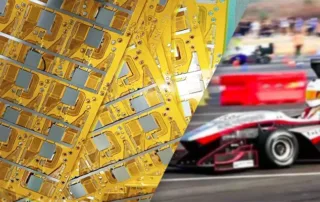
How Flexible PCBs Power Formula Student Race Cars: Design and Applications
Flexible Printed Circuits (FPC) have emerged as an ideal alternative to traditional wiring harnesses in the electrical systems of Formula Student China race cars due to their lightweight, bendable nature, and high-density wiring capabilities. Within the confined cabin space of FS vehicles, the electrical system faces dual technical challenges: ensuring operational reliability while optimizing spatial layout. This is particularly[...]
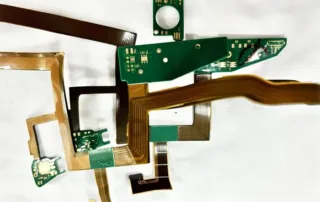
Flexible Coating Materials in Circuit Board Manufacturing
Flexible coating materials play an increasingly critical role in the modern circuit board industry as electronic products continue to evolve toward higher density, lighter weight, and greater mechanical reliability. From flexible printed circuits (FPCs) to rigid-flex and high-reliability PCBs, these materials are widely applied to protect conductive traces, enhance environmental resistance, and maintain electrical performance under repeated bending, vibration,[...]

Flexible Printed Circuits on Textiles via Screen Printing for Wearable Electronics
The principle of flexible electronic printing technology involves using inks with electronic functionality to fabricate electronic devices or circuits on flexible substrates through precision printing techniques. The printed circuits possess corresponding electronic capabilities. Flexible electronic printing technology holds broad application prospects in radio frequency identification (RFID) tags, sensors, thin-film transistors, supercapacitors, and other fields. Printing is a relatively low-cost[...]
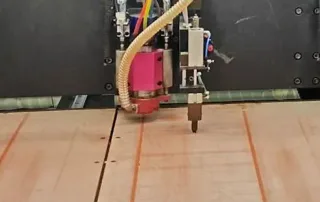
Optimization of Flexible PCB Materials Micro-Drilling
Flexible Printed Circuit Boards (FPCBs), commonly referred to as flexible boards, are highly reliable printed circuit boards with exceptional flexibility, manufactured using polyimide or polyester film as the substrate material. Compared to rigid circuit boards, flexible boards offer inherent flexibility and advantages such as ease of bending, lightweight construction, and thin profile. Structurally, flexible boards are formed by bonding[...]
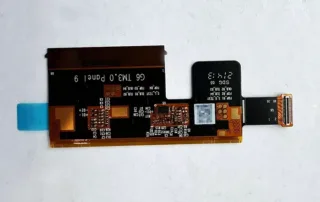
Flexible PCB: Features, Design Guide, Applications, and Benefits
Flexible printed circuit boards (flexible boards or flex PCBs) are thin, lightweight electronic interconnects designed to bend, fold, or twist to fit complex three-dimensional assemblies. Unlike traditional rigid PCBs, flexible boards are typically manufactured using polyimide or polyester substrates that provide excellent thermal stability, mechanical flexibility, and electrical insulation. This structure enables designers to reduce assembly space, eliminate bulky[...]
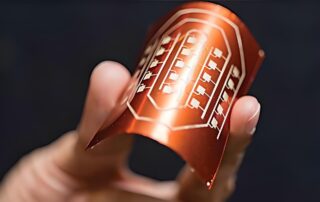
Flexible PCB Cost 2025: Calculator, Price per Sq.Inch & Low-Cost Manufacturing Guide
How Much Does a Flexible PCB Cost? The average flexible PCB cost ranges from $0.50 to $30+ per square inch in 2025, depending on layer count, materials, and order volume. This guide reveals cost calculation methods, compares flex vs rigid PCB cost structures, and provides actionable strategies for low-cost PCB fabrication. Key Cost Drivers of Flexible PCBs 1. PCB Cost Per Square Inch Breakdown Parameter Cost[...]
PCB Testing: 8 Essential Methods for Quality Assurance (2025 Update)
Printed circuit boards (PCBs) are essential components for all electronic products. Manufacturers use them in smartphones, medical devices, computers, and military equipment. As PCBs become more complex with high densities, fine pitches, and multilayers, full test coverage is crucial. This helps protect against hidden defects and ensures steady manufacturing yields. In today’s post, we will explore 8 common PCB testing[...]
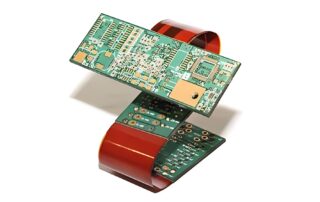
Rigid Flex PCB Manufacturing: A Process Overview
Rigid Flex PCB Manufacturing: A Process Overview 1. What is a Rigid Flex PCB? A rigid flex PCB combines stiff board parts with flexible sections in one structure. This design removes connectors, which cause 82% of connection failures (IPC-2223 data). These rigid flex printed circuit boards excel in: High-density packaging: 3D configurations reduce space by 60% vs. traditional PCBs Extreme environments:[...]
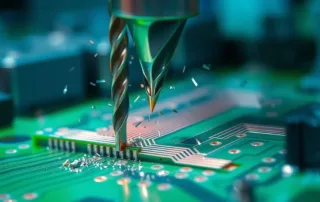
PCB Drilling Techniques Explained: Laser vs Mechanical, Hole Types & Quality Insights
Introduction: Why PCB Drilling Matters More Than Ever In modern electronics manufacturing, PCB drilling is not just a routine step. It is key for making vertical connections between copper layers. This process helps deliver high-performance signal routing. As designs become smaller, 5G technology, and high-density applications increase, the quality of holes in PCBs is important. It impacts product reliability, yield,[...]
Advanced Manufacturing Technologies for High-Current, High-Shielding FPCB Solutions
In recent years, with the rapid development of the intelligent connected vehicle industry, the demand for flexible printed circuit boards (FPCBs) has continued to grow. Statistics indicate that each smart connected vehicle utilizes over 100 FPCBs. Driven by modern market demands, FPCBs are increasingly replacing rigid circuit boards in fields such as low-altitude aircraft and military applications. This shift enables[...]
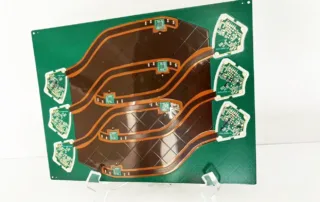
How to Achieve High Precision in Flexible Copper Clad Laminates Using Dual-Laser Etching?
Flexible copper-clad laminate (FCCL), serving as the substrate material for flexible printed circuits (FPC), offers distinct advantages such as lightweight, flexibility, compact size, and excellent heat resistance. Manufacturers widely adopt it in electronic products to achieve miniaturization and portability. This approach aligns with the development trends of high-precision electronics industries such as micro-robotics, new energy vehicles, 5G communication devices, and[...]
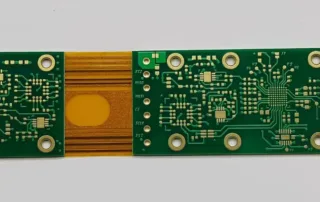
What Are the Best Methods to Improve PCB Micro-Drill Performance on Flex Boards?
Manufacturers produce Flexible Printed Circuit Boards (FPCBs), commonly referred to as flexible circuit boards, as highly reliable printed circuit boards with exceptional flexibility, using polyimide or polyester film as the substrate material. Compared to rigid circuit boards, flexible boards offer inherent flexibility, ease of bending, lightweight properties, and thin profile advantages. Structurally, manufacturers form flexible boards by bonding a[...]
Research on the Manufacturing Process of Semi-Rigid Flex Printed Circuit Boards
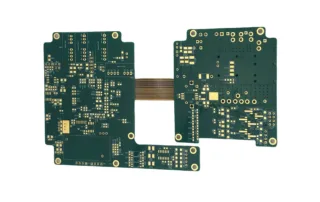
Semi-rigid printed circuit boards form a type of rigid-flex printed circuit board (R-FPCB). The conventional rigid board manufacturing process produces them by milling or cutting out openings (windows) in areas requiring flexibility. They eliminate the need for expensive flexible materials like polyimide (PI), reducing costs while offering more stable electrical performance. These boards commonly serve in static or semi-dynamic[...]
Experimental Study on Crimp Terminals for FPCB Connectors
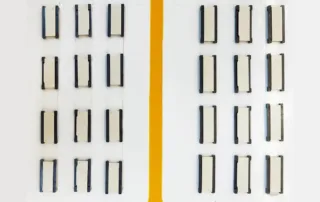
With the continuous expansion of flexible printed circuit board (FPCB) applications, certain FPCBs now serve as connectors linking functional modules. Traditional FPCB plugs are prone to wear during connector interface insertion and removal, compromising electrical connection stability. Terminal crimping technology involves the sharp tip of the connector terminal piercing through the insulating material on both sides of the FPCB[...]
Advanced Analysis of Bump Crack Formation Mechanisms in FPCB Manufacturing
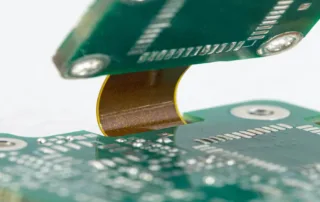
Flexible printed circuit boards (FPCBs) serve as the core components enabling flexible connections within electronic devices. To ensure optimal contact between certain specialized devices and other components, bump technology is employed on FPCB connection pads. Examples include applications such as the subscriber identity module (SIM) card slot in point-of-sale (POS) systems used for sales transactions, printer ink cartridges, and[...]