
Explore the Cutting – Edge World of PCB Technology!
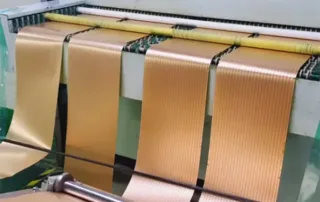
Enhancing FPC Insulation Performance in Ultra-Long Thick Copper Flexible Circuits
Flexible printed circuit boards (FPCs) have gained widespread adoption in consumer electronics, new energy vehicles, aerospace, and medical equipment due to their lightweight, bendable nature, and high integration capabilities. As electronic devices evolve toward higher power and density, demand for ultra-long, thick copper FPCs is growing to meet requirements for high current-carrying capacity and efficient heat dissipation. However, thick[...]
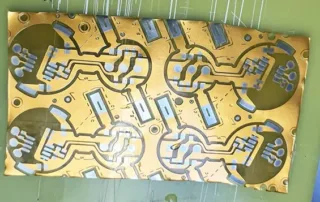
PTFE Blind Via Processing for High-Frequency FPC: Process Optimization and Insertion Los
Industry Background and Technology Trends With the rapid advancement of artificial intelligence, 5G communications, and IoT technologies, electronic devices are rapidly evolving toward higher frequencies, faster speeds, miniaturization, and integration. Against this backdrop, high-frequency flexible printed circuit boards (FPCs), as critical interconnect components, face increasingly stringent performance requirements. Signal transmission integrity and low-loss characteristics have become key factors determining[...]
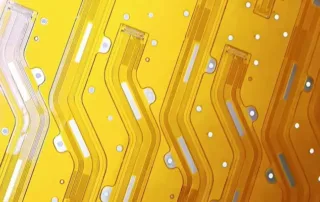
Optimizing Blind Slot Multilayer Flexible PCB Manufacturing: A New Laser-Controlled Fabrication Method
As an interconnection between electronic components, multilayer flexible printed circuit boards (FPCBs) meet the circuit connection needs of various electrical and electronic products. They align with the industry trend toward lighter, thinner, shorter, smaller, higher-performance, and high-density electronic devices. Electronic products become increasingly miniaturized and diversified. Traditional planar circuit boards face significant constraints in space utilization and safety. Fail[...]
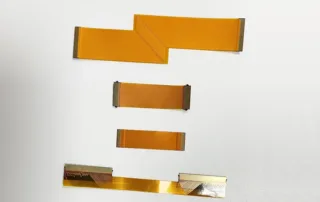
Flexible Tactile Sensor Design Using FPCB Processing for Robotic and Industrial Applications
Tactile sensors can obtain relevant characteristics of both the sensor and the contacted object's surface through physical contact, such as temperature, pressure, hardness, and material properties. With the advancement of robotic bionics, the application scope of these “artificial skin”-like tactile sensors continues to expand, playing an increasingly vital role in robotic bionics, medical devices, and various industrial equipment. Scholars[...]
What is the Class-Wire Harness Flexible PCB Manufacturing Technology?
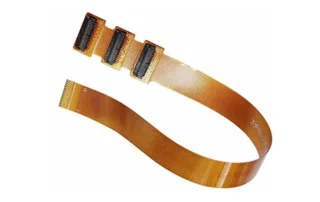
In recent years, the rapid development of high-end industries such as intelligent connected vehicles and low-altitude aircraft has driven continuous innovation in flexible printed circuit boards (FPCBs). In traditional automotive applications, certain wiring and distribution functions rely on wire harnesses, as illustrated in Figure 1. Conventional wire harnesses feature a structure where copper wires are encased in plastic insulation[...]
What is the PI protective film process for rigid-flex PCBs?
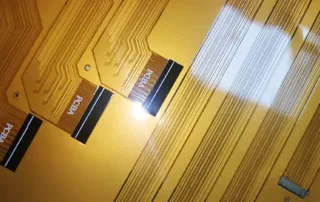
Rigid-flex printed circuit boards (R-FPCBs) are composite boards formed by pressing rigid and flexible layers together, combining the characteristics of both. With the advancement of the printed circuit board (PCB) industry, R-FPCBs—as a vital component of PCBs—have seen growing demand due to their high performance, integration capabilities, and versatility in three-dimensional assembly. With the rapid advancement of R-FPCB technology,[...]
Optimizing Blind Slot Multilayer Flexible PCB Manufacturing: A New Laser-Controlled Fabrication Method
As an interconnection between electronic components, multilayer flexible printed circuit boards (FPCBs) meet the circuit connection needs of various electrical and electronic products. They align with the industry trend toward lighter, thinner, shorter, smaller, higher-performance, and high-density electronic devices. Electronic products become increasingly miniaturized and diversified. Traditional planar circuit boards face significant constraints in space utilization and safety. Fail[...]
Flexible Tactile Sensor Design Using FPCB Processing for Robotic and Industrial Applications
Tactile sensors can obtain relevant characteristics of both the sensor and the contacted object's surface through physical contact, such as temperature, pressure, hardness, and material properties. With the advancement of robotic bionics, the application scope of these “artificial skin”-like tactile sensors continues to expand, playing an increasingly vital role in robotic bionics, medical devices, and various industrial equipment. Scholars[...]
High-Frequency Flexible PCB Impedance Control: Complete Design & Engineering Guide
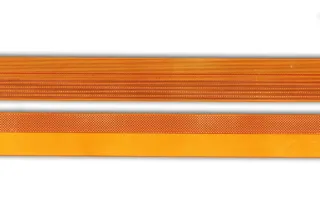
Introduction Why the high frequency flexible PCB broken by wrong derating? It's a question often asked by RF engineers. In the case of high-frequency boards such as those used in 5G, IoT modules, and aerospace systems, small impedance mismatches can lead to large signal reflections, which in turn degrade the signal integrity of the system as a whole. What is a High Frequency[...]
Cleaning PCB Boards: Expert Practical Tips & Best Practices
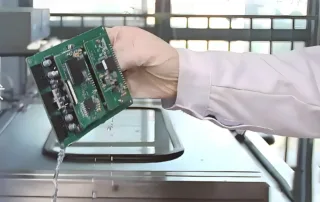
Why Cleaning PCB Boards Is Crucial? PCBs accumulate flux residues, solder paste, dust, and oils during manufacturing or field use. Left unaddressed, these contaminants can trap moisture and create conductive paths, leading to short circuits and accelerated corrosion. Dust and particulates act as insulators, reducing heat dissipation and causing overheating of sensitive electronic components. Over time, dirty boards have more[...]
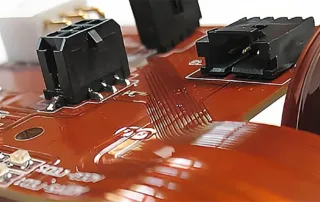
Flexible PCB Design: Avoid These 6 Common Mistakes
Flexible PCB Design: Avoid These 6 Common Mistakes Flexible PCB design is crucial for creating lightweight, compact, and high-performance electronics. Flexible printed circuits (FPCs) have three main advantages over rigid circuit boards. They are lighter, more adaptable, and can bend without breaking. However, these benefits also come with specific design challenges that many engineers overlook. This guide from Gekun, a[...]
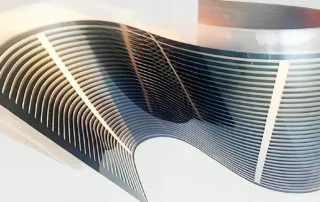
How to Choose the Right Flex Material for Your PCB
In the fast-evolving world of electronics, flexible circuits enable revolutionary design possibilities. The foundation of any high-performance FPC lies in selecting the right flex material. But how do you choose the best option when there are so many combinations — RA or ED copper? Adhesive or adhesiveless? Thick or ultra-thin? This article provides a professional yet clear guide tailored for[...]
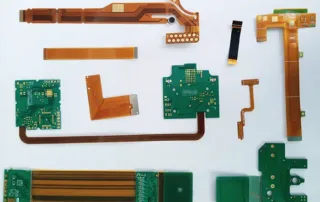
Research on the process of PI protective film for R-FPCB
Rigid-flex printed circuit boards (R-FPCBs) are composite boards formed by pressing rigid and flexible layers together, combining the characteristics of both. With the advancement of the printed circuit board (PCB) industry, R-FPCBs—as a vital component of PCBs—have seen growing demand due to their high performance, integration capabilities, and versatility in 3D assembly. With the rapid advancement of RFPCB technology, customer[...]
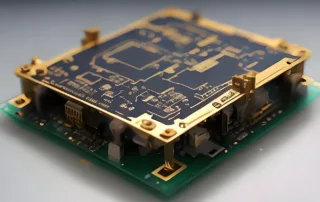
PCB Surface Finish Types Explained: Best Options for Flexible PCBs
Introduction: Why Surface Finish Matters in PCB Fabrication Every circuit board requires protection for its copper traces. Without a reliable finish, exposed copper quickly oxidizes, reducing electrical conductivity and making soldering nearly impossible. This is why PCB surface finishes are a critical step in PCB fabrication. Surface finishes serve as a protective layer. They create a flat surface for attaching[...]
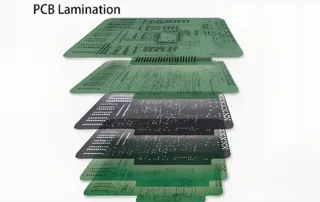
PCB Lamination Process Explained: From Rigid Boards to Flex PCB Manufacturing
PCB Lamination Process Explained: From Rigid Boards to Flex PCB Manufacturing Introduction: Why Lamination Matters in PCB Fabrication Lamination is a key step in making PCBs. It affects how strong and well the finished PCB works. The lamination process is key to making multilayer boards. This includes both rigid boards and flexible circuit boards. It determines how well the[...]
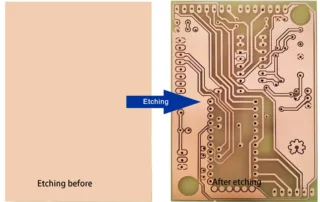
PCB Etching Process: Flexible PCB & Rigid Flex Manufacturing
PCB Etching Process: Flexible PCB & Rigid Flex Manufacturing Introduction The etching task in PCB design is one of the most important steps in making printed circuit boards. It directly influences the precision of the circuit trails, hence performance, as well as the life of the end product. Accurate etching is important. It is used to create a standard[...]
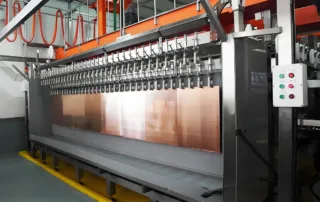
PCB Copper Plating Process for Reliable Conduction
Introduction Copper plating plays a crucial role in the production of PCBs. It ensures good electrical connections and strong mechanical support for printed circuit boards. These will create strong and stable traces. You can trust their quality even after bending or heat treatment. The copper plating process for flexible PCBs is like that for rigid PCBs. This article focuses on[...]
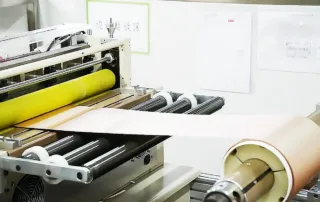
Flexible PCB Material Preparation: Cutting process
Introduction Flexible materials come in rolls. The material is cut to the needed size based on the MI size Material preparation is the first and critical step in any flex PCB manufacturing process.Proper material preparations reduce defects in later steps.This guide focuses on cutting and cleaning.It explains materials, methods, controls, and best practices.Engineers and procurement teams will find practical, actionable[...]
What is the relationship between PCB trace width and current?
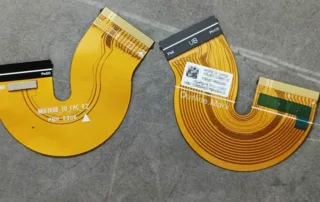
In PCB design, current-carrying capacity is one of the most misunderstood yet most critical parameters—particularly in power electronics, motor drivers, and high-current control systems. While signal integrity, impedance control, and EMC often receive significant attention, trace current capacity is frequently reduced to rough rules of thumb or “experience-based judgment.” This approach works—until it doesn’t. Unlike wires, PCB traces are[...]
Optimizing Flexible PCB Design with Heuristic A* Algorithm for FPC Routing
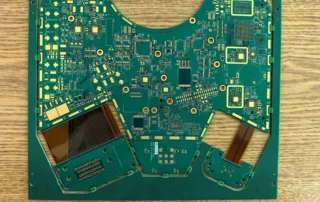
Modern electronic devices are trending toward thinner, lighter, and more highly integrated designs. Consequently, FPC design and the A* algorithm have emerged as key research directions for optimizing flexible circuit board routing. Flexible circuit boards (FPCs), valued for their bendability, compressibility, and high reliability, are widely adopted in consumer electronics and high-end electronic systems. However, their routing design demands[...]
Flex PCB: Basic Characteristics and types
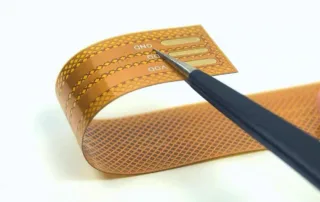
Flexible Printed Circuit Board (FPCB), commonly abbreviated as flexible board, also known as flexible circuit or soft board, is a bendable printed circuit board (PCB) and constitutes a major category within PCBs. Within the industry, some abbreviate FPCB as FPC. This is incomplete because “printed circuit” only represents part of the board and does not encompass the entire board. Therefore,[...]
Flexible PCB Material Stack-Up: Types, Functions, and Performance
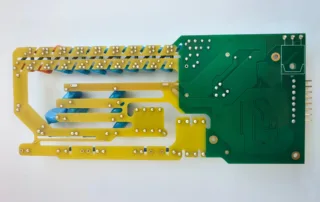
A printed circuit board (PCB) is defined as a functional board that provides point-to-point connection lines and printed component interconnections on an insulating substrate according to a predetermined design. A flexible printed circuit board (FPCB) is a functional board that forms printed circuits on a bendable, flexible insulating substrate. Its basic structure is shown in Figure 1. Figure 1[...]
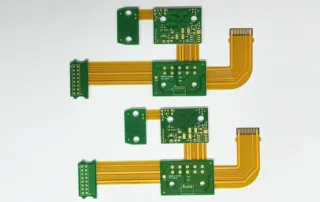
What are the core challenges in manufacturing Flex pcb?
As the “flexible nerves” of electronic devices, the manufacturing of FPC boards represents a precision art in modern industry. In smartphones, FPCs just 0.03mm thick must carry 10A currents; in satellite antennas, multilayer FPCs endure extreme temperature cycles from -180°C to 200°C. These seemingly contradictory performance metrics are precisely why FPC technology has long been pushed to the limits of[...]
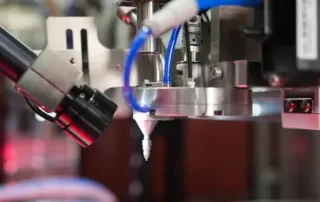
Precision Laser Soldering for FPCBs: Low Heat, High Reliability in Wearables and Medical Electronics
In fields such as consumer electronics, medical electronics, and wearable devices, flexible printed circuit boards (FPCBs) have become the core medium for achieving product miniaturization and structural innovation due to their characteristics of being lightweight, thin, bendable, and resistant to repeated bending. However, the substrate materials of Flex PCBs (such as PI film and PET film) exhibit poor heat resistance[...]