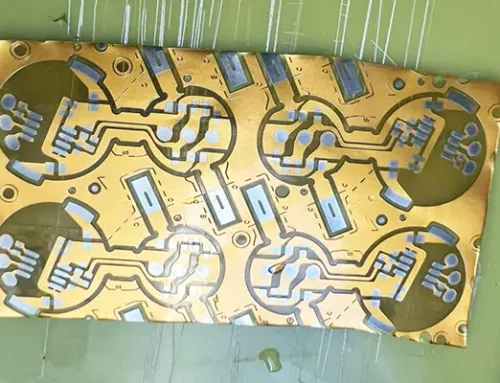
How can FPC be made to have good resistance to bending?
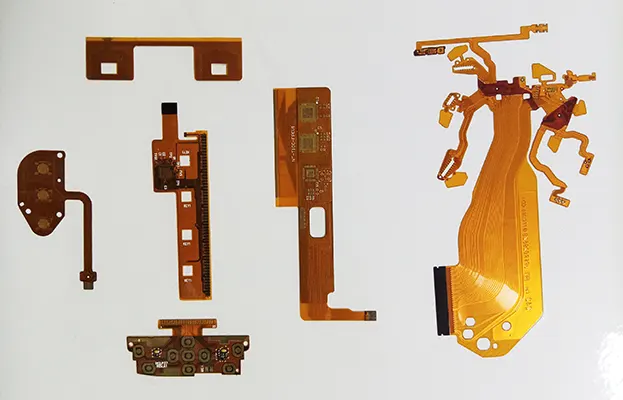
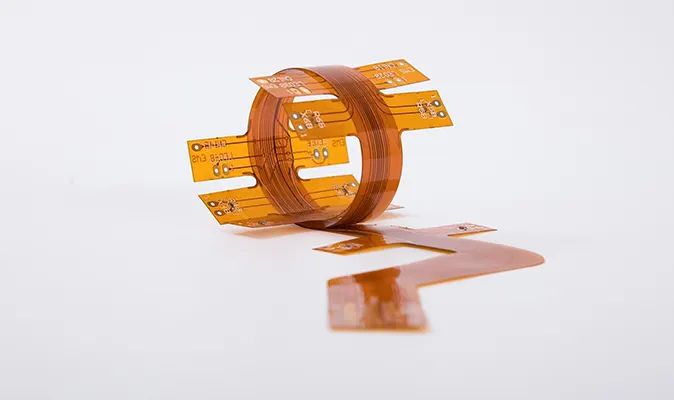
Flexible printed circuits (FPCs) are increasingly deployed in compact electronics, robotics, medical devices, and wearable systems.
However, the mechanical performance requirements of a flex circuit depend fundamentally on whether the application involves static bending or dynamic bending.
Understanding this distinction at the design stage determines material selection, laminate architecture, routing strategy, and mechanical constraints.
“Static Bending” or “Dynamic Bending”?
Static Bending
Static bending refers to applications in which the flex circuit is bent only once or a limited number of times during installation or assembly. Typical examples include internal interconnections in smartphones, camera modules, laptops, and display assemblies.
In these scenarios, the design objective is primarily to prevent fracture during installation. After final assembly, the flex remains essentially stationary.
Mechanical reliability requirements focus on avoiding copper cracking or delamination during the initial forming process.
Industry reliability standards generally consider static bend designs adequate if they withstand a limited number of bend cycles (often fewer than 100 cycles) without electrical discontinuity.
Dynamic Bending
Dynamic bending involves repeated flexing throughout the product lifecycle.
Examples include flip phone hinges, foldable displays, robotic arm wiring, automotive steering sensors, medical wearable devices, and vibration-exposed industrial sensors.
Here, the design emphasis shifts to fatigue resistance. Copper conductors undergo cyclic tensile and compressive strain, which can lead to micro-crack initiation and propagation.
Research and IPC reliability data show that rolled annealed (RA) copper flex circuits can endure 10⁵–10⁷ bending cycles under optimized conditions, whereas electrolytic copper structures often fail at significantly lower cycle counts under comparable strain levels.
The difference arises primarily from copper grain morphology and strain distribution characteristics.
Dynamic bending therefore, presents a substantially more demanding engineering challenge and requires a systematic design strategy from material selection through mechanical integration.
How to Achieve Flexural Resistance at the Design Stage
Reliable flexural performance is not achieved through a single parameter. Instead, it results from coordinated optimization of materials, laminate structure, routing design, and mechanical constraints.
Material Selection and Laminate Design
Material choice fundamentally determines fatigue behavior because cyclic strain accumulates within the copper and dielectric layers.
› Core Material
Polyimide (PI) remains the industry-standard base material due to its excellent thermal stability, flexibility, and mechanical durability.
For dynamic bending applications, thinner PI cores—commonly 0.5 mil (12.5 μm) or 1 mil (25 μm)—are preferred. Thinner substrates reduce the neutral axis distance and lower tensile strain on copper during bending.
Modified PI formulations with enhanced tear strength and elongation properties further improve durability.
Typical mechanical properties of PI used in flex circuits:
| Property | Typical Value |
|---|---|
| Tensile Strength | 150–200 MPa |
| Elongation at Break | 40–70% |
| Glass Transition Temperature (Tg) | > 260°C |
| Continuous Operating Temp. | 200–240°C |
› Copper Foil
Copper type is one of the most critical determinants of dynamic bending life.
Rolled annealed (RA) copper is mandatory for dynamic applications. Its lamellar grain structure, formed through rolling and annealing, allows grains to elongate and redistribute strain during bending.
By contrast, electrolytic (ED) copper features a columnar grain structure that is more prone to crack initiation under cyclic stress.
Ultra-thin copper foils significantly reduce bending stress. Common options include:
| Copper Type | Grain Structure | Typical Thickness | Relative Fatigue Resistance |
|---|---|---|---|
| ED Copper | Columnar | 1 oz (35 μm) | Low–Moderate |
| RA Copper | Lamellar | 1/3 oz (12 μm) | High |
| RA Copper | Lamellar | 1 oz (35 μm) | Moderate–High |
Thinner copper lowers strain according to classical bending theory:
ε=t/2R
Where:
ε = strain,
t = total thickness,
R = bending radius
Reducing copper thickness directly reduces peak strain during flexing.
› Adhesive Systems
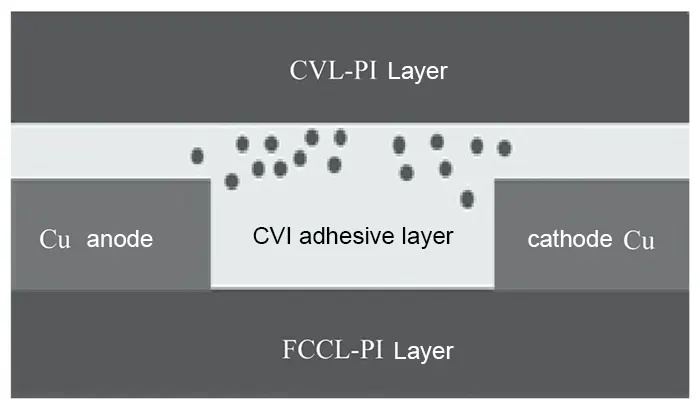
Traditional acrylic or epoxy adhesive layers introduce mechanical discontinuities between copper and PI. Under repeated bending, these adhesive layers may harden, crack, or delaminate, becoming failure initiation sites.
Adhesive-free laminates eliminate this weak interface by directly casting or sputtering copper onto polyimide.
Studies show adhesive-free constructions can improve bending life by 2–5× compared to adhesive-based systems in dynamic applications.
› Cover Film
Solder mask inks, commonly used in rigid PCBs, are brittle and unsuitable for bending zones. Instead, flexible polyimide cover films with flexible acrylic or epoxy adhesive layers are recommended.
Key design considerations include:
Full coverage of conductors for mechanical protection
Controlled thickness to avoid localized stiffness increases
Reinforcement or air-gap structures in transition zones to distribute stress
Avoiding abrupt thickness changes at bend/non-bend boundaries
Proper coverlay design significantly reduces surface cracking and conductor exposure.
Routing Strategy
Even optimal materials will fail prematurely if routing geometry concentrates stress.
› Bend Zones
Bend zones must be clearly defined during schematic and layout design. These regions should exclude:
Components
Vias
Pads
Stiffeners
Gold fingers
Mechanical isolation ensures uniform strain distribution and prevents localized stress amplification.
› Trace Orientation
Traces must run perpendicular to the axis of the bend.
When oriented in this way, strain is distributed along the conductor length. Traces running parallel to the bend axis concentrate strain across the conductor width, dramatically increasing crack risk.
› Trace Geometry
Smooth curvature is essential.
Right-angle (90°) trace corners create stress concentration factors (SCF) that accelerate crack initiation. Curved transitions reduce peak stress. Tear-drop pads are recommended even in non-bending areas to improve copper-to-pad reliability.
› Trace Width and Spacing
Uniform trace widths prevent stiffness discontinuities. Abrupt widening or narrowing increases local strain gradients.
Maximized spacing between traces allows material to expand and contract freely during bending, reducing inter-trace stress coupling.
Mechanical Design Constraints
Mechanical integration defines the final stress state imposed on the flex circuit.
› Bending Radius
Industry best practices recommend:
| Application Type | Minimum Bending Radius |
|---|---|
| Static Bending | ≥ 5–6 × total thickness |
| Dynamic Bending | ≥ 10 × total thickness |
| Extended Life Design | 20–30 × total thickness |
More conservative radii significantly extend fatigue life. Increasing the bending radius reduces strain proportionally, as shown by the bending strain equations.
› Stress Relief Design
At the transition between bending and rigid zones, stiffness mismatches generate concentrated stress.
Effective strategies include:
Wavy or scalloped cover film profiles to smooth stiffness transitions
Large-radius (large-R) mechanical interfaces
Gradual thickness transitions
Avoiding abrupt reinforcement boundaries
Proper stress relief design can double or triple cycle life in dynamic applications.
What Considerations Are Involved in Manufacturing Design?
Even when materials and layout are optimized, manufacturing quality ultimately determines whether a flex circuit achieves its intended bending life.
Process variability, micro-defects, or insufficient validation can significantly reduce fatigue resistance.
Therefore, manufacturing design must emphasize process stability, defect minimization, and reliability verification under simulated service conditions.
Process Control
Manufacturing precision directly influences stress distribution at the microscopic level. Since fatigue cracks often initiate at defects, strict process control is essential.
After etching, conductor sidewalls must be smooth and free from burrs or notches. Sharp micro-edges act as stress concentration points where cyclic strain accumulates.
High-resolution photolithography, optimized etchant chemistry, and controlled etching rates help maintain uniform trace geometry.
Statistical process control (SPC) methods are typically applied to monitor line width variation and sidewall quality.
Even a few micrometers of over-etch or undercut can measurably influence fatigue life in ultra-thin copper structures.
Lamination processes require equally rigorous control. Entrapped air bubbles or uneven adhesive flow introduce voids that function as crack initiation sites under repeated bending.
Vacuum lamination, controlled pressure ramp-up profiles, and optimized temperature dwell times are critical to ensure uniform adhesive thickness and strong copper-to-PI bonding.
In adhesive-free constructions, copper casting or sputtering parameters must be tightly controlled to ensure interfacial adhesion strength and uniform copper thickness distribution.
Cover film processing also demands precision. Windowing must be accurately aligned to prevent exposed conductors in bending zones.
Incomplete coverage can lead to copper oxidation, stress concentration, and mechanical abrasion during operation. Lamination pressure and adhesive flow must be optimized to prevent squeeze-out or resin starvation near edges.
Dimensional tolerance control is particularly important in narrow dynamic bending areas where even minor misalignment can create stiffness irregularities.
Across all processes, cleanliness and surface preparation are essential. Surface contamination reduces adhesion and may cause premature delamination during cyclic stress exposure.
Many high-reliability manufacturers implement plasma cleaning or chemical surface activation before lamination to enhance interfacial bonding.
Reliability Verification
Manufacturing robustness must be validated through systematic reliability testing that simulates real-world mechanical and environmental stresses.
Bending fatigue testing is the primary verification method. Test setups replicate actual bending radius, angle, frequency, and environmental conditions.
Standards such as IPC-2223 (Sectional Design Standard for Flexible Printed Boards) and IPC-TM-650 (Test Methods Manual) guide dynamic flex testing procedures.
Typical dynamic bend tests may involve 180° flexing around a defined mandrel radius at controlled cycle rates, with electrical continuity monitored throughout testing.
For demanding applications, qualification targets may exceed 100,000 to 1,000,000 cycles, depending on product requirements.
Micro-section analysis is conducted after predefined cycle intervals. Cross-sectional samples are prepared to evaluate copper cracking, grain boundary separation, adhesive delamination, and coverlay integrity.
High-magnification optical microscopy or scanning electron microscopy (SEM) is often used to identify early-stage microcracks before electrical failure occurs. This analysis provides insight into failure mechanisms and supports process optimization.
Environmental reliability tests are equally important because mechanical stress often interacts with thermal and humidity exposure.
Thermal cycling tests, typically ranging from −40°C to +125°C in automotive-grade applications, evaluate differential expansion effects between copper and polyimide.
Temperature-humidity cycling tests assess moisture absorption and its impact on adhesive layers and interfacial bonding. Combined environmental-mechanical testing can reveal synergistic failure mechanisms not observable in single-stress testing.
A comprehensive verification matrix typically includes:
| Test Type | Purpose | Typical Conditions |
|---|---|---|
| Dynamic Bend Test | Evaluate fatigue resistance | Defined radius, 90°–180° flex, up to 10⁶ cycles |
| Micro-Section Analysis | Detect micro-cracks/delamination | After set cycle intervals |
| Thermal Cycling | Assess expansion mismatch effects | −40°C to +125°C, 500–1000 cycles |
| Temperature-Humidity Cycling | Evaluate moisture impact | 85°C / 85% RH, 500–1000 hours |
These validation procedures ensure that mechanical design assumptions align with actual manufacturing output and real-world operating conditions.
Integrating Design and Manufacturing
In high-reliability flexible circuit applications, manufacturing is not a downstream step but an integrated element of design engineering.
Early collaboration between design engineers and fabrication teams enables optimization of etching tolerances, lamination parameters, copper type selection, and coverlay structures before production release.
When process control, defect prevention, and rigorous reliability verification are systematically implemented, flexible circuits can achieve predictable and durable performance—even in demanding dynamic bending environments.
Conclusion
The bend resistance of FPCB boards primarily depends on the following factors:
1. Material Selection: Flexibility of the substrate (e.g., polyimide PI), durability of the adhesive, and copper foil type (rolled annealed copper RA offers better bend resistance than electrolytic copper ED).
2. Circuit Design: Trace width, thickness, routing direction, bend radius (avoid sharp angles; use curved routing), and layer stackup structure.
3. Manufacturing Process: Laminating process uniformity, application of coverlays/protective coatings (e.g., polyimide coverlay), and etching precision.
4. Mechanical Factors: Bending radius (smaller radii increase stress), bending frequency and direction, stress concentration points (e.g., near holes or pads).
5. Environmental Conditions: Temperature (high temperatures accelerate aging), humidity (affects material stability), chemical exposure, or mechanical vibration.