
Types of Flex PCBs: Single-Sided Double-Sided and Multilayer?
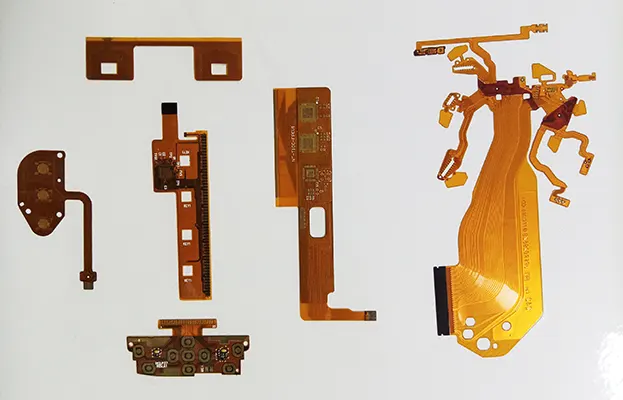

Flexible printed circuit boards (flex PCBs) are electrical interconnection structures fabricated on thin, flexible polymer substrates—most commonly polyimide—designed to bend, fold, or dynamically flex during operation.
From an engineering standpoint, the selection of a flex PCB type is not a cosmetic or secondary decision. It directly influences system reliability, total manufacturing cost, ease of assembly, and long-term product lifespan. In applications subjected to vibration, thermal cycling, or repeated mechanical motion, an inappropriate flex construction can become the primary failure point of an otherwise robust design.
This article is positioned as a technical selection guide for engineers and product designers. Rather than providing a superficial overview, it analyzes single-sided, double-sided, and multilayer flexible PCBs from electrical, mechanical, and manufacturing perspectives, enabling informed trade-off decisions early in the design phase—when cost and reliability are most effectively controlled.
Classification of Flexible PCBs: An Engineering Perspective
Flexible PCBs are typically classified along three interrelated engineering dimensions. The first is copper layer count, which directly affects routing density, impedance control, and power distribution capability. The second is electrical complexity, encompassing signal speed, noise sensitivity, and grounding requirements. The third is mechanical flexibility, which distinguishes static flex designs from dynamic flex applications involving thousands or millions of bend cycles.
Although industry discussions often focus on layer count alone, experienced designers recognize that mechanical stress distribution and electrical performance are inseparable in flex circuitry. A single-layer circuit optimized for dynamic bending may outperform a poorly designed multilayer flex in real-world reliability.
A concise comparison table previewing these trade-offs is provided later in Section 6, where electrical performance, cost, and mechanical durability are evaluated side by side.
Single-Sided Flexible PCB
Structure and Stack-Up
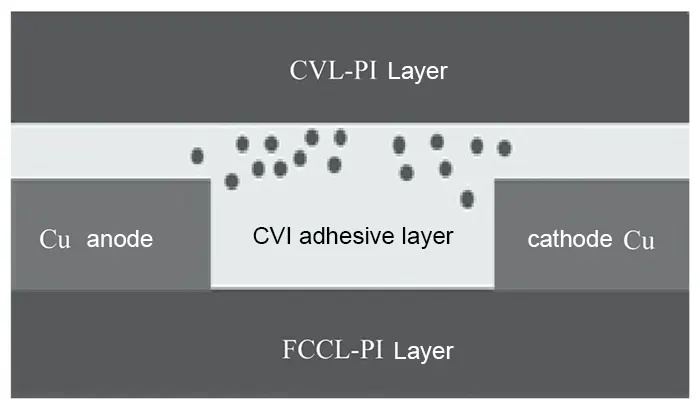
A single-sided flexible PCB consists of one conductive copper layer laminated onto a polyimide (PI) substrate, protected by a polyimide coverlay with adhesive. Typical PI thickness ranges from 12.5 µm to 50 µm, while copper thickness is commonly 12 µm, 18 µm, or 35 µm.
A critical structural distinction lies between adhesive-based and adhesiveless constructions. Adhesiveless flex circuits deposit copper directly onto the polyimide substrate through sputtering or casting processes. This eliminates the adhesive layer, reducing total thickness by approximately 20–30% and significantly improving thermal stability and flex fatigue performance.
Key Electrical and Mechanical Characteristics
Single-sided flex PCBs exhibit excellent bendability due to their minimal stack-up thickness. In dynamic applications, adhesiveless single-sided flex circuits can achieve bend cycle lifetimes exceeding 10 million cycles at bend radii greater than 10 times the circuit thickness, according to IPC-2223 guidelines.
Electrically, however, current-carrying capacity is limited by the single copper layer. Trace widths must be increased to handle higher currents, which constrains routing density. Typical minimum trace/space values are 75/75 µm for standard production, though advanced manufacturers can achieve 50/50 µm with yield trade-offs.
Manufacturing Considerations
From a fabrication perspective, single-sided flex PCBs offer the highest yields and lowest process complexity. Etching is straightforward, registration requirements are relaxed, and inspection processes are simpler. These factors contribute to lower scrap rates and predictable costs, particularly in medium-to-high volume production.
Because lamination cycles are minimal, dimensional stability is superior compared to multilayer constructions, which is advantageous for fine-pitch component assembly.
Typical Applications
Single-sided flex circuits are widely used in static or limited-flex designs such as consumer electronics interconnects, LCD connections, membrane switches, and simple sensor interfaces. Their mechanical robustness under bending makes them suitable for fold-once or fold-few architectures commonly seen in compact consumer devices.
When Not to Use Single-Sided Flex
Despite their advantages, single-sided flex PCBs are not suitable for high-density signal routing, controlled impedance transmission lines, or designs requiring effective electromagnetic interference (EMI) suppression. The absence of a reference plane complicates impedance control and increases susceptibility to crosstalk and radiated emissions. Additionally, scalability is limited when future design revisions require increased signal counts.
Double-Sided Flexible PCB
Structure and Interconnection Methods
Double-sided flexible PCBs incorporate two copper layers on a polyimide substrate, interconnected using plated through-holes (PTHs) or laser-drilled microvias. Both sides are typically protected by coverlay, making precise coverlay-to-pad alignment a critical manufacturing challenge.
Via structures in flex circuits are inherently more vulnerable to mechanical fatigue than traces, particularly under repeated bending. As a result, via placement relative to bend areas becomes a key reliability consideration.
Electrical Advantages Over Single-Sided Flex
The presence of a second copper layer substantially increases routing density and enables dedicated ground or power planes. This improves signal return paths and allows basic impedance control, making double-sided flex suitable for mixed-signal and moderate-speed digital designs.
Measured impedance variation in well-designed double-sided flex circuits can be held within ±10%, which is acceptable for many automotive and industrial communication protocols.
Mechanical Performance
The additional copper layer reduces overall flexibility and increases minimum bend radius requirements. In practice, double-sided flex PCBs are often designed with clearly defined bend zones (no vias, reduced copper width) and rigidized zones for component mounting. Compared to single-sided flex, fatigue life under dynamic bending is typically reduced by 30–50%, depending on stack-up and via density.
Manufacturing Complexity
Manufacturing double-sided flex requires accurate drilling, reliable copper plating in vias, and tighter registration control during lamination. These factors increase fabrication cost but offer a favorable performance-to-cost balance when moderate electrical complexity is required without the expense of multilayer flex.
Common Use Cases
Double-sided flex PCBs are widely deployed in automotive electronics, industrial control systems, LED lighting modules, and sensor assemblies, where enhanced electrical performance is needed but space constraints or motion requirements still favor flexible interconnects.
Multilayer Flexible PCB
What Defines a Multilayer Flex PCB
Multilayer flexible PCBs consist of three or more conductive copper layers separated by polyimide dielectric films. Interconnections are achieved using stacked or staggered via structures, with staggered vias generally offering superior mechanical reliability under bending stress.
Total layer counts typically range from 4 to 10, though specialized applications may exceed this.
Electrical Performance Benefits
Multilayer flex PCBs provide significant electrical advantages, including controlled impedance transmission lines, continuous reference planes, and effective EMI suppression. High-speed digital signals above 5 Gbps and RF signals into the GHz range can be routed with predictable performance when proper stack-up design is employed.
Ground planes reduce loop inductance and noise coupling, which is critical in dense mobile and medical electronics.
Mechanical Design Challenges
As layer count increases, flexibility decreases. Minimum bend radius requirements increase substantially, and stress concentrations develop between copper layers during bending. Multilayer flex designs are therefore commonly classified as static flex, intended for installation bends rather than continuous motion.
Dynamic multilayer flex designs are possible but require extensive fatigue modeling and conservative design margins.
Manufacturing and Reliability Factors
Multilayer flex fabrication demands precise lamination control, tight thickness tolerances, and rigorous inspection processes such as AOI and X-ray analysis. Via fatigue life becomes a dominant reliability concern, especially in stacked via configurations. Yield risks are higher, and cost increases non-linearly with layer count.
High-End Applications
Multilayer flex PCBs are essential in space-constrained, high-performance systems such as smartphones, digital cameras, medical imaging equipment, aerospace avionics, and satellite electronics, where electrical performance outweighs fabrication complexity.
Comparative Analysis: Single vs Double vs Multilayer Flex PCBs
| Parameter | Single-Sided Flex | Double-Sided Flex | Multilayer Flex |
|---|---|---|---|
| Copper layers | 1 | 2 | ≥3 |
| Flexibility | Excellent | Moderate | Limited |
| Electrical performance | Low–Moderate | Moderate–High | High |
| Impedance control | Poor | Basic | Precise |
| Manufacturing cost | Low | Medium | High |
| Bend cycle reliability | Very high | Medium | Low–Medium |
| Recommended use | Simple, dynamic flex | Mixed-signal, moderate density | High-speed, high-density |
This comparative view is critical for buyer intent and early-stage design decision-making, particularly when balancing performance requirements against lifecycle cost.
Design Selection Guidelines: How to Choose the Right Flex PCB Type
Engineers should begin by determining whether the flex circuit will experience static or dynamic bending, as this immediately constrains viable constructions. Required bend radius, expected cycle life, signal speed, power levels, and assembly methods must then be evaluated holistically. In many cases, a lower-layer flex with optimized routing will outperform a higher-layer design burdened by unnecessary complexity.
Effective flex PCB design is ultimately an exercise in managing trade-offs between electrical performance, mechanical durability, and manufacturing economics.
Role of Stiffeners Across Different Flex PCB Types
Stiffeners are used to reinforce areas subjected to connector insertion forces or SMT assembly. Common materials include polyimide for flexibility continuity, FR-4 for cost efficiency, and stainless steel for maximum rigidity. Single-sided flex often uses minimal stiffening, while multilayer flex designs rely heavily on stiffeners to protect solder joints and vias. Improper stiffener selection can negate the mechanical benefits of a flexible circuit.
Common Design and Manufacturing Mistakes to Avoid
Frequent causes of flex PCB failure include over-bending multilayer circuits beyond their minimum radius, placing vias within bend zones, poorly designed coverlay openings that concentrate stress, and ignoring copper grain direction, which directly affects fatigue resistance. These issues are preventable through early DFM collaboration.
Future Trends in Flexible PCB Technology
The industry is moving toward ultra-thin copper foils below 9 µm, advanced adhesiveless substrates, and hybrid rigid-flex architectures that consolidate assemblies. High-frequency flex circuits for 5G and medical imaging are driving tighter impedance control requirements, while automation and inline inspection are improving yields in complex flex fabrication.
Conclusion: Selecting the Right Flex PCB Is a Strategic Decision
The choice of flex PCB type has far-reaching implications for product reliability, time-to-market, and total cost of ownership. Thoughtful selection—grounded in mechanical realities and electrical requirements—transforms the flex PCB from a vulnerability into a competitive advantage.
Organizations that treat flex PCB suppliers as technical partners, rather than commodity vendors, consistently achieve better design outcomes.
References
IPC-2223C, Sectional Design Standard for Flexible Printed Boards, IPC Association
IPC-6013E, Qualification and Performance Specification for Flexible Printed Boards
DuPont™, Kapton® Polyimide Film Technical Guide
Altium, Flexible PCB Design Guidelines and Best Practices
IEEE Transactions on Components, Packaging and Manufacturing Technology, studies on flex PCB fatigue life