
How to Custom flex PCB manufacturing services?
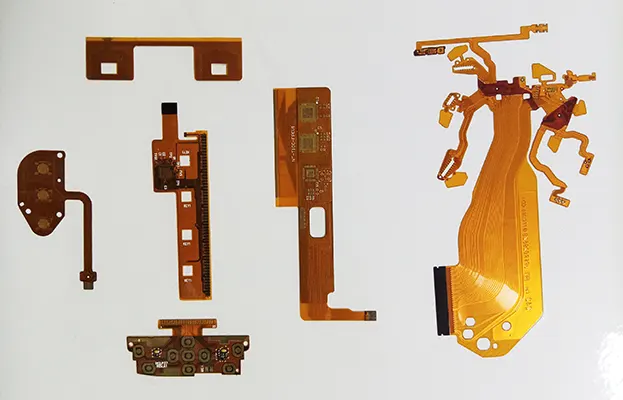
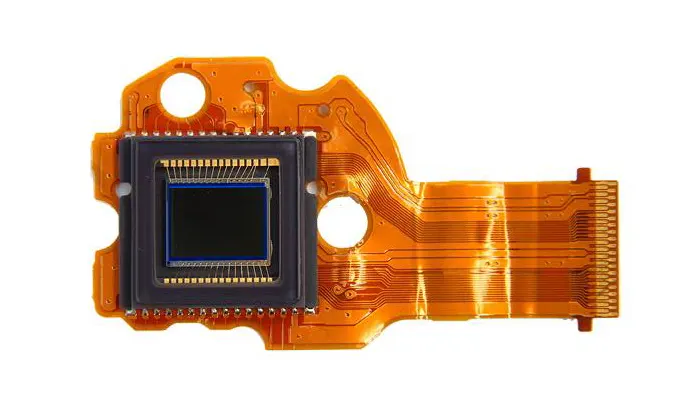
Flexible printed circuit boards (Flex PCBs) have become a core enabling technology for modern electronics where compact form factors, lightweight structures, and dynamic mechanical performance are required.
Industries such as wearable electronics, medical devices, automotive electronics, aerospace systems, and Internet of Things (IoT) devices increasingly rely on custom flex circuits to achieve high-density interconnects in three-dimensional packaging environments.
Compared with traditional rigid PCBs, flexible circuits allow designers to fold, bend, or twist the circuitry without compromising electrical functionality.
This capability significantly reduces connector count, improves reliability, and enables miniaturization in devices such as smart watches, implantable medical electronics, automotive sensor modules, and foldable consumer electronics.
However, off-the-shelf flex PCB solutions rarely meet the requirements of complex applications. Standard boards typically provide limited choices in stack-up design, impedance control, mechanical reinforcement, and reliability validation.
Advanced products often require customized geometries, specialized materials (such as polyimide substrates), and tailored manufacturing processes to meet strict electrical and mechanical performance targets.
Custom flex PCB manufacturing services address these challenges by integrating product-specific requirements into the design, fabrication, and assembly process.
This article provides a professional overview of how engineers can define requirements, optimize design parameters, and collaborate with manufacturers to produce fully customized flex PCBs for high-performance electronic systems.
Understanding Custom Flex PCBs Needs
Successful custom flex PCB development begins with a comprehensive understanding of the system requirements. Unlike standard rigid PCBs, flexible circuits must satisfy both electrical performance and mechanical deformation requirements simultaneously.
Defining Structural Requirements
Engineers must first determine the mechanical characteristics of the circuit. Important parameters include:
Board size and irregular shapes
Layer count and copper thickness
Required bending angles and frequency of flexing
Assembly constraints within the device enclosure
Flexible circuits are typically constructed using polyimide substrates with copper traces laminated on one or more layers. Commercial flex PCBs commonly contain 1–12 conductive layers depending on application complexity.
Thinner structures improve flexibility but may limit current-carrying capability and mechanical strength. Designers therefore need to balance electrical and mechanical properties when defining the stack-up.
Example Flex PCBs Structural Parameters
| Parameter | Typical Range |
|---|---|
| Copper thickness | 0.5 oz – 1 oz |
| Layer count | 1 – 12 layers |
| Substrate material | Polyimide, Polyester, LCP |
| Minimum trace width | 0.05 – 0.10 mm |
| Minimum trace spacing | 0.075 mm |
Typical flexible circuits rely on lighter copper layers than rigid boards to reduce stress during bending.
Mechanical Stress and Flexing Conditions
Another key factor is whether the PCB will undergo static bending or dynamic flexing during operation.
Static bending: One-time installation bend (e.g., camera modules)
Dynamic flexing: Continuous bending cycles (e.g., hinge electronics)
Dynamic applications require significantly larger bend radii and fatigue-resistant materials. Industry guidelines recommend bend radii proportional to the circuit thickness.
Recommended Bend Radius Guidelines
| Application | Minimum Bend Radius |
|---|---|
| Static bending | 3–6 × board thickness |
| Dynamic bending | 10–20 × board thickness |
| High-cycle flex (>1M cycles) | Up to 20–40 × thickness |
Exceeding the recommended bending limits can cause copper trace cracking or dielectric failure.
High-quality flexible PCB designs may achieve more than one million bending cycles in dynamic applications when properly engineered.
Functional Requirements
Electrical performance is equally critical in custom flex circuits. Modern electronic devices frequently integrate high-speed interfaces such as:
USB 3.x
PCIe
MIPI
LVDS
RF communication modules
These signals require careful attention to impedance control, electromagnetic interference (EMI), and signal integrity.
Typical electrical requirements include:
| Parameter | Typical Requirement |
|---|---|
| Controlled impedance | 50Ω / 90Ω / 100Ω |
| Maximum signal frequency | >1 GHz |
| Differential pair skew | <10 ps |
| Crosstalk margin | >20 dB isolation |
For high-frequency designs, trace width, dielectric thickness, and copper weight must be carefully tuned to achieve consistent impedance characteristics across the flexible substrate.
Compliance and Reliability Considerations
Different industries impose strict reliability and regulatory requirements for electronic components.
Industry Reliability Standards
| Industry | Typical Standard |
|---|---|
| Medical devices | ISO 13485, IEC 60601 |
| Automotive electronics | IATF 16949, AEC-Q100 |
| Aerospace | IPC-6013 Class 3 |
| Consumer electronics | IPC-2223 |
IPC-2223 is the widely recognized design standard specifically addressing flexible PCB design rules and reliability validation.
Environmental factors must also be evaluated:
Temperature range
Humidity exposure
Mechanical vibration
Chemical resistance
Proper material selection, adhesive systems, and coverlay protection are essential to prevent delamination and corrosion during long-term operation.
Design Considerations for Custom Flex PCBs
Once requirements are defined, the next stage involves optimizing the flex PCB design to ensure manufacturability, mechanical reliability, and electrical performance.
Layout Strategies for Complex Geometries
Flexible circuits often follow complex three-dimensional paths inside compact devices. As a result, routing strategies differ significantly from traditional rigid PCB design.
Recommended layout practices include:
Avoid routing traces directly across flex-rigid transition zones
Use curved traces instead of sharp angles
Increase trace spacing in bending areas
Route traces perpendicular to the bending axis where possible
Curved routing distributes mechanical stress more evenly and reduces the risk of copper fatigue during repeated bending.
Additionally, vias and pads should not be placed in bending zones because they create rigid points that concentrate stress and can lead to delamination or cracking.
Layer Stack-Up Optimization
The stack-up configuration significantly influences both flexibility and electrical behavior.
A typical multilayer flex PCB stack may include:
| Layer | Function |
|---|---|
| Coverlay | Mechanical protection |
| Copper layer | Signal routing |
| Adhesive layer | Lamination bonding |
| Polyimide dielectric | Flex substrate |
| Copper layer | Ground or signal |
Proper stack symmetry is essential to prevent curling or mechanical imbalance. Balanced copper layers on both sides of the substrate help distribute stress during bending.
Reducing layer count and total thickness generally improves flex life.
Controlled Impedance and High-Speed Signals
Flexible substrates introduce additional challenges for high-speed digital and RF signals.
Factors affecting impedance include:
Dielectric constant of polyimide (~3.2–3.5)
Copper thickness
Trace width
Distance to reference plane
In many designs, differential pair routing is used to maintain signal integrity and reduce EMI.
Example Impedance Design Parameters
| Parameter | Example Value |
|---|---|
| Substrate thickness | 50 µm |
| Copper thickness | 18 µm |
| Trace width | 0.2 mm |
| Spacing | 0.2 mm |
| Resulting signal capability | Up to ~1 GHz |
Proper trace geometry can support gigahertz-level signal transmission while maintaining flexibility.
Managing Bend Areas and Mechanical Stress
The bending region of a flex PCB requires specialized design techniques to ensure durability.
Key Design Rules
| Rule | Purpose |
|---|---|
| Maintain large bend radius | Reduce copper fatigue |
| Avoid vias in bend area | Prevent stress concentration |
| Use rolled annealed copper | Improve fatigue resistance |
| Place components outside flex zones | Protect solder joints |
Trace routing should also follow the mechanical axis of the bend to distribute stress evenly across the conductor width.
Typical flex PCB thickness and bend radius relationships are shown below.
Flex Layer Thickness vs Bend Radius
| Flex Thickness | Minimum Bend Radius |
|---|---|
| 2 mil | 6–8 mil |
| 3 mil | 9–12 mil |
| 4 mil | 12–16 mil |
These guidelines help engineers prevent copper cracking and extend flex circuit lifespan.
Material Selection for Custom Solutions
Material selection is one of the most critical decisions in custom flex PCB development because it directly affects electrical performance, flexibility, durability, and manufacturing yield. Unlike rigid PCBs that commonly rely on FR-4 laminates, flexible circuits use specialized substrates and copper structures designed to tolerate repeated mechanical deformation.
Selecting the appropriate material system requires balancing mechanical flexibility, thermal stability, dielectric properties, and long-term reliability.
Substrate Materials: Polyimide, PET, and Hybrid Systems
The base dielectric layer in flexible circuits is typically made from polymer films that provide mechanical flexibility and electrical insulation. Among available options, polyimide has become the industry standard due to its superior thermal resistance and mechanical durability.
Polyimide materials can operate continuously at temperatures above 200 °C, which makes them suitable for soldering processes and high-temperature electronic environments. Polyester (PET), while more cost-effective, has lower thermal tolerance and is typically used in lower-cost consumer electronics.
Common Flex PCB Substrate Materials
| Material | Typical Thickness | Operating Temperature | Key Advantages | Typical Applications |
|---|---|---|---|---|
| Polyimide (PI) | 12–125 μm | Up to ~260 °C | High flexibility, excellent thermal stability | Medical, aerospace, automotive |
| Polyester (PET) | 25–125 μm | Up to ~120 °C | Low cost, good dimensional stability | Consumer electronics |
| Liquid Crystal Polymer (LCP) | 25–100 μm | Up to ~240 °C | Low dielectric constant, low moisture absorption | High-frequency RF circuits |
Polyimide remains dominant in professional applications because of its high flexural endurance and chemical resistance. LCP materials are increasingly adopted in high-frequency communication systems due to their low dielectric loss.
Copper Foil, Adhesive Systems, and Coverlay Structures
Copper foil plays a major role in determining both electrical conductivity and mechanical fatigue resistance. Flexible PCBs generally use rolled annealed (RA) copper rather than electrodeposited copper because RA copper exhibits improved grain structure that withstands repeated bending cycles.
Copper thickness must be selected carefully. Thicker copper layers increase current capacity but reduce flexibility and raise the risk of cracking during bending.
Typical Copper Thickness in Flex PCBs
| Copper Weight | Thickness | Typical Use |
|---|---|---|
| 0.5 oz | ~17 μm | High-density signal routing |
| 1 oz | ~35 μm | General signal and power circuits |
| 2 oz | ~70 μm | High-current applications |
Adhesive systems are another important consideration. Traditional flexible laminates use epoxy or acrylic adhesives to bond copper to the dielectric substrate. However, adhesiveless laminates are increasingly used in advanced electronics because they reduce dielectric thickness and improve signal performance.
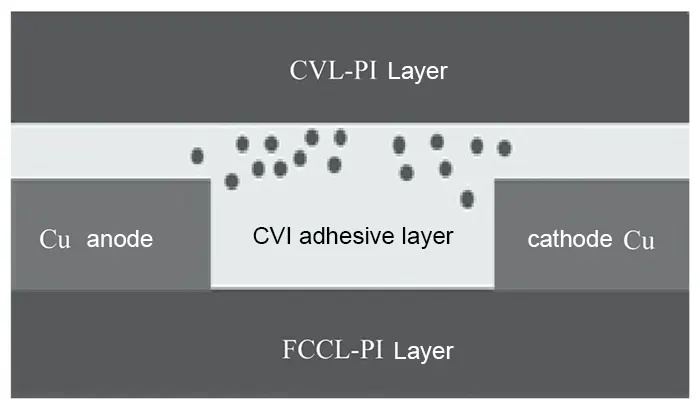
Coverlay films provide insulation and mechanical protection for the copper traces. Polyimide coverlay layers combined with adhesive coatings protect the circuit against abrasion, moisture, and soldering heat.
Surface Finishes and Protective Coatings
Surface finish selection affects solderability, corrosion resistance, and long-term electrical reliability. In flexible circuits, the finish must also remain stable under mechanical deformation.
Common Surface Finishes for Flex PCBs
| Surface Finish | Key Characteristics | Typical Applications |
|---|---|---|
| ENIG (Electroless Nickel Immersion Gold) | Flat surface, excellent solderability | High-reliability electronics |
| Immersion Silver | Good conductivity and RF performance | High-frequency circuits |
| OSP (Organic Solderability Preservative) | Low cost, environmentally friendly | Consumer electronics |
| Hard Gold | High wear resistance | Connector pads and gold fingers |
Harsh operating environments—such as automotive engine compartments or industrial systems—may require additional protective coatings. Conformal coatings or specialized encapsulation materials protect flexible circuits from moisture, vibration, and chemical exposure.
Materials for High-Frequency and High-Temperature Applications
Advanced electronic systems increasingly demand materials capable of supporting both high-speed signal transmission and elevated operating temperatures.
High-frequency circuits often utilize substrates with low dielectric constant and low loss tangent. For example, LCP materials typically exhibit a dielectric constant around 2.9–3.2, which is lower than polyimide materials. This property improves signal integrity in RF and microwave designs.
Similarly, aerospace and automotive applications frequently require materials capable of continuous operation above 150 °C while maintaining mechanical flexibility and dimensional stability.
Careful coordination between design engineers and PCB manufacturers is essential when specifying specialized material systems, as processing parameters such as lamination temperature and drilling conditions must be adjusted accordingly.
Fabrication Process for Custom Flex PCBs
The fabrication of custom flex PCBs involves a series of precision manufacturing processes that transform raw materials into highly reliable flexible circuits.
While the general process resembles rigid PCB manufacturing, flexible circuits require additional control over lamination pressure, copper adhesion, and mechanical stress.
Prototype Development vs Full-Scale Production
Custom flex PCB projects typically begin with prototype fabrication to validate both electrical functionality and mechanical performance.
Early prototypes allow engineers to test bending behavior, impedance characteristics, and component placement before committing to large production volumes.
Prototype builds usually involve small batches and manual inspection procedures. Once the design is validated, production moves to automated manufacturing lines that optimize yield and cost efficiency.
Typical Development Phases for Custom Flex PCBs
| Development Stage | Purpose | Typical Quantity |
|---|---|---|
| Engineering prototype | Design validation and electrical testing | 5–20 units |
| Pilot production | Process optimization | 50–200 units |
| Mass production | Full manufacturing scale | 1000+ units |
Transitioning from prototype to mass production often requires adjustments to panelization, tooling holes, and handling fixtures to prevent damage to the flexible substrate during automated processing.
Drilling, Via Formation, and Circuit Etching
After lamination of copper and dielectric materials, circuit patterns are created through photolithography and chemical etching processes similar to those used in rigid PCBs.
However, the flexible substrate requires specialized handling to maintain dimensional stability during exposure and development.
Drilling operations create vias and component holes. Laser drilling is commonly used for microvias in high-density designs, while mechanical drilling is applied for larger through-holes.
Via Types in Flex PCB Manufacturing
| Via Type | Diameter Range | Typical Use |
|---|---|---|
| Through-hole via | 0.2–0.5 mm | Standard multilayer connections |
| Blind via | 0.1–0.2 mm | HDI interconnections |
| Microvia | <0.1 mm | High-density routing |
After drilling, vias are plated with copper to establish electrical connectivity between layers. Precise control of plating thickness is necessary to ensure reliability during bending.
Coverlay Application and Surface Finishing
Once the circuit traces are formed, protective layers are applied to shield the copper from environmental damage and mechanical wear. The coverlay film is laminated onto the circuit using heat and pressure, forming openings where components will be soldered.
Surface finishing processes are then applied to exposed copper pads. For high-reliability electronics, ENIG finishes are commonly selected because they provide excellent corrosion resistance and stable solder joints.
Proper lamination and curing conditions are essential during this stage. Excessive pressure or temperature can distort the flexible substrate or cause dimensional instability.
Quality Control and Reliability Testing
Custom flex PCBs undergo rigorous quality control procedures designed to verify both electrical functionality and mechanical durability.
Electrical testing confirms that all conductive paths meet design specifications and that there are no open circuits or short circuits.
Mechanical testing evaluates the circuit’s ability to withstand repeated bending cycles without failure.
Key Reliability Tests for Flex PCBs
| Test Method | Purpose |
|---|---|
| Dynamic bend test | Evaluate fatigue resistance |
| Peel strength test | Measure copper adhesion |
| Thermal cycling | Assess temperature reliability |
| Electrical continuity test | Verify circuit integrity |
Peel strength values above 0.7–1.0 N/mm are typically required to ensure reliable copper adhesion in flexible circuits. Maintaining this level of adhesion is critical for preventing trace delamination during mechanical flexing.
Advanced Customization Options
As electronic devices continue to shrink and integrate more functionality, manufacturers increasingly rely on advanced flex PCB technologies that combine mechanical flexibility with high-density interconnect capabilities.
Rigid-Flex Integration
Rigid-flex PCBs integrate flexible circuits with rigid PCB sections into a single unified structure. This architecture allows designers to mount components on rigid areas while using flexible sections to connect different parts of the device.
Rigid-flex solutions eliminate many connectors and cables traditionally used in electronic assemblies.
By reducing mechanical interconnections, rigid-flex designs significantly improve reliability in vibration-prone environments such as aerospace systems and automotive electronics.
High-Density Interconnect (HDI) Flex Circuits
Miniaturized electronic products frequently require extremely fine conductor geometries and compact routing structures. HDI flex PCBs incorporate microvias, thin dielectric layers, and fine line traces to increase routing density.
Modern HDI processes can achieve trace widths below 50 µm and microvia diameters under 100 µm, enabling compact designs for smartphones, wearable electronics, and advanced sensor modules.
These technologies allow engineers to integrate more functionality into smaller form factors while maintaining signal integrity and mechanical reliability.
Multilayer and High-Frequency Flex Circuits
Some advanced electronic systems require multilayer flexible circuits with complex routing and shielding layers. Multilayer designs typically include dedicated ground planes and controlled impedance traces to support high-speed communication protocols.
High-frequency flex circuits are commonly used in radar systems, RF communication modules, and satellite electronics.
Material systems such as LCP or modified polyimide substrates reduce signal loss and maintain stable electrical performance at gigahertz frequencies.
Typical High-Frequency Flex PCB Properties
| Property | Typical Value |
|---|---|
| Dielectric constant | 2.9–3.5 |
| Loss tangent | 0.002–0.005 |
| Signal frequency capability | Up to 10 GHz |
Maintaining controlled impedance across flexible substrates requires careful stack-up design and precise manufacturing tolerances.
Specialized Surface Treatments
Flexible circuits may require specialized surface finishes to meet unique functional requirements.
Gold finger plating is frequently used in connector interfaces where repeated mechanical contact occurs. Hard gold coatings provide superior wear resistance and ensure reliable electrical contact over thousands of insertion cycles.
In applications where solderability and environmental compliance are critical, manufacturers may apply HAL-free surface finishes such as ENIG or immersion silver.
These finishes provide excellent corrosion resistance without introducing excessive thermal stress during processing.
Additional protection can be achieved using conformal coatings that encapsulate the flexible circuit.
These coatings protect against humidity, dust, and chemical exposure, making them essential for industrial electronics, automotive systems, and aerospace equipment.
Choosing the Right Manufacturer for Custom Flex PCBs
Selecting a capable manufacturing partner is one of the most critical decisions in custom flex PCB development.
Even with a well-optimized design, the final performance of a flexible circuit depends heavily on the manufacturer’s process control, material expertise, and engineering support capabilities.
For professional electronic products—particularly those used in medical devices, aerospace electronics, and automotive systems—the manufacturer must demonstrate both technical competence and strict quality management.
Evaluating Manufacturing Capabilities
When assessing potential flex PCB manufacturers, engineers should consider several technical capabilities that influence reliability and production efficiency.
Manufacturers with advanced fabrication equipment and experienced engineering teams are better equipped to handle complex flex circuit structures such as HDI interconnects, rigid-flex architectures, and high-frequency substrates.
Key Capability Criteria for Flex PCB Suppliers
| Capability Category | Evaluation Criteria | Importance |
|---|---|---|
| Certifications | ISO 9001, ISO 13485, IATF 16949, IPC-6013 | Ensures process quality |
| Engineering support | DFM analysis, stack-up optimization | Improves manufacturability |
| Prototype capability | Rapid prototype fabrication | Accelerates product development |
| Process technology | Laser drilling, HDI fabrication | Supports advanced designs |
| Quality assurance | AOI, electrical testing, reliability testing | Ensures long-term reliability |
Certification and traceability requirements are particularly important for industries with strict regulatory standards. Manufacturers serving medical or automotive markets often maintain additional documentation and process controls to meet these requirements.
Quality control systems also influence production costs and reliability. More rigorous testing procedures—such as automated optical inspection or detailed electrical verification—can increase production cost by 10–20% but significantly reduce defect risk.
Collaboration During Design and Production
Close collaboration between engineers and manufacturers significantly improves the success rate of custom flex PCB projects.
Unlike standard rigid boards, flexible circuits involve more complex interactions between materials, mechanical behavior, and electrical performance.
Design-for-manufacturing (DFM) reviews are particularly valuable during early design stages.
During a DFM review, manufacturing engineers analyze the design for potential fabrication challenges such as trace spacing limitations, panel utilization efficiency, or bending stress concentrations.
Early collaboration can also reduce cost. A short engineering review can identify design adjustments that reduce manufacturing complexity and save 10–30% in production costs.
Manufacturers that provide strong technical communication during the quoting and engineering stages are typically better partners for long-term product development. Efficient communication helps prevent delays during production and ensures that design revisions are implemented correctly.
Examples of Custom Flex PCB Problem-Solving
Real-world projects often require creative engineering solutions to address complex mechanical and electrical challenges.
For example, wearable medical devices frequently require extremely thin flex circuits capable of repeated bending. In such cases, manufacturers may recommend rolled-annealed copper combined with adhesiveless polyimide laminates to increase fatigue resistance.
Automotive sensor modules provide another example. These systems must tolerate temperature cycles ranging from –40 °C to over 125 °C while maintaining electrical stability.
Manufacturers may address this requirement through multilayer polyimide structures combined with high-reliability surface finishes such as ENIG.
These examples demonstrate the importance of selecting a manufacturer that can contribute engineering insight rather than simply executing fabrication instructions.
Cost and Lead Time for Custom Solutions
Custom flex PCB manufacturing involves a wide range of cost variables because each design may require different materials, processing technologies, and inspection procedures.
Understanding these cost drivers helps engineers and procurement teams optimize project budgets without compromising reliability.
Factors Affecting Custom PCB Cost
The overall cost of a custom flex PCBs depends on several technical parameters, including layer count, material selection, circuit complexity, and production volume.
Major Cost Drivers in Flex PCB Manufacturing
| Cost Factor | Impact on Cost | Explanation |
|---|---|---|
| Layer count | High | Each additional layer increases lamination steps |
| Trace density | Medium–High | Fine lines require precision etching |
| Material selection | Medium | Advanced substrates such as LCP cost more |
| Surface finish | Medium | Hard gold or immersion finishes add process steps |
| Volume | High | Larger quantities reduce per-unit cost |
Manufacturing complexity also affects pricing. Processes such as microvias, HDI routing, or specialized surface finishes can increase production cost by 10–20% due to additional processing steps and equipment requirements.
Another important factor is production volume. As production quantity increases, fixed setup costs such as tooling and engineering are distributed across more units, reducing per-board cost.
Example Flex PCB Cost vs Order Quantity
| Order Quantity | Typical Unit Cost |
|---|---|
| 1–5 boards | $50–200+ |
| 10–25 boards | $25–80 |
| 50–100 boards | $10–35 |
| 500–1000 boards | $4–15 |
| 5000+ boards | $1.5–8 |
Higher production volumes can reduce unit pricing by as much as 80–95% compared with prototype quantities.
In addition to fabrication costs, assembly of electronic components on flexible circuits may increase production cost by 20–40% compared with rigid PCB assembly, particularly in low-volume builds.
Strategies to Minimize Cost While Meeting Specifications
Reducing flex PCB manufacturing cost requires balancing technical requirements with manufacturing efficiency.
One effective strategy is minimizing layer count. Many designs initially specify more layers than necessary; optimizing the stack-up may reduce both material usage and lamination cycles.
Panel utilization is another important factor. Flexible circuits are fabricated on large copper-clad panels, and inefficient layouts can lead to material waste. Working with manufacturers to optimize panelization can significantly improve yield and reduce cost.
Material selection should also be aligned with the product’s performance requirements. For example, advanced substrates such as LCP may be necessary for high-frequency RF circuits but may be unnecessary for standard digital electronics.
Typical Lead Times for Custom Flex PCBs
Lead time varies depending on manufacturing complexity, production volume, and supplier capacity.
Typical Flex PCB Lead Time by Production Stage
| Production Stage | Typical Lead Time |
|---|---|
| Rapid prototype | 24–72 hours |
| Engineering prototypes | 3–7 days |
| Pilot production | 1–2 weeks |
| Full production | 2–4 weeks |
Quick-turn prototype services may produce small batches in 24–48 hours, while larger production runs typically require 10–20 days depending on quantity and complexity.
Standard production schedules may extend to 8–12 weeks for complex multilayer or rigid-flex designs when low-cost manufacturing is prioritized.
Customization—such as special materials, controlled impedance structures, or HDI features—can increase both production time and engineering preparation.
Conclusion
Flexible printed circuit boards have become an essential technology for modern electronic systems where compact form factors, high reliability, and mechanical adaptability are required.
From wearable devices and medical electronics to automotive sensors and aerospace communication systems, custom flex PCBs enable design architectures that cannot be achieved with conventional rigid circuit boards.
The successful implementation of custom flex circuits requires a comprehensive design approach that integrates electrical performance, mechanical reliability, and manufacturing feasibility.
Engineers must carefully define parameters such as material systems, layer stack-ups, bending characteristics, and signal integrity requirements during the early design phase.
Equally important is the selection of a capable manufacturing partner. Experienced flex PCB manufacturers provide engineering support, design-for-manufacturing analysis, and advanced fabrication technologies that significantly improve product reliability and development efficiency.
For procurement teams and engineering groups seeking high-performance flexible electronics, detailed technical specifications and early collaboration with manufacturers are essential steps in achieving optimal results.
By partnering with experienced custom flex PCB manufacturers and adopting a systematic design approach, organizations can accelerate product innovation while maintaining cost efficiency and long-term reliability in increasingly complex electronic systems.