
DFM Rules for Flex PCB: Designing for Manufacturability and Reduced Failures
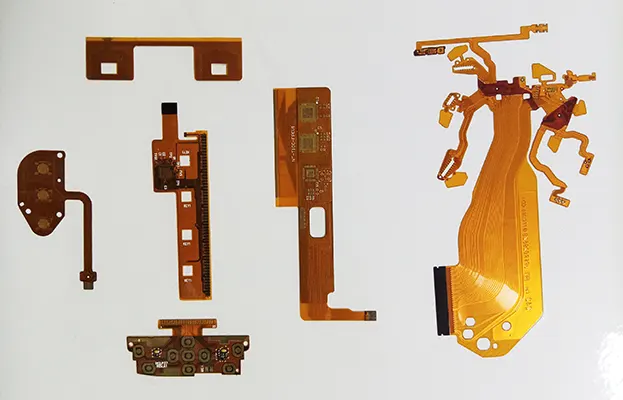
Flexible printed circuits are not new technology. Polyimide films, rolled-annealed copper, coverlay systems, and laser processing have been industrialized for decades. Yet scrap, rework, and premature field returns remain stubbornly high in flex programs. The contradiction is simple: fabrication capability is mature, but many designs still ignore manufacturability physics.
In rigid boards, geometric compliance is often sufficient. If impedance is right and spacing meets the code, the board is usually built. Flex is different. The product is expected to move, survive assembly strain, tolerate thermal excursions, and sometimes bend millions of cycles. Mechanical behavior becomes inseparable from electrical function.
When Design for Manufacturability (DFM) is weak, the financial penalty compounds quickly. Industry benchmarks typically show:
| Cost Element | Typical Impact of Poor DFM |
|---|---|
| Fabrication yield loss | 5–20% depending on layer count and bend complexity |
| Assembly rework | 2–10% |
| Latent field failures | Often dominate total lifecycle cost |
| Engineering time | Extra ECO loops, prototype spins |
Because flex circuits are frequently integrated into high-value assemblies, the downstream failure cost can exceed bare board price by orders of magnitude.
DFM rules also diverge sharply from rigid and rigid-flex practice. In rigid designs, stiffness is desirable; in flex, excess stiffness becomes a failure driver. Copper symmetry, adhesive selection, and neutral-axis control are rarely dominant topics in rigid PCBs but are central in flex reliability.
What Manufacturability Really Means for Flex PCBs
From a fabrication viewpoint, a design is manufacturable when it can be built repeatedly, within process capability, without extraordinary handling. From an assembly viewpoint, it must also survive soldering, forming, and installation stresses.
A design may be electrically perfect and still fail because:
copper work-hardens during forming,
adhesives cannot tolerate reflow dwell,
plated through holes sit in high-strain zones,
or asymmetric metal distribution drives curl.
In flex manufacturing audits, the most frequent DFM-driven failure modes include:
| Failure Mode | Physical Mechanism |
|---|---|
| Copper cracking | Tensile strain exceeds elongation limit |
| Coverlay lifting | Adhesive shear under bending or heat |
| Barrel fracture | Repeated flexing at plated vias |
| Conductor delamination | Poor adhesion or z-axis expansion |
| Warpage/twist | Copper imbalance & CTE mismatch |
The key insight is timing. Once the artwork is released, the material set, and the tooling are defined, most risk is already locked in. Late corrections become patchwork solutions such as stiffeners, selective bonding, or manual forming operations—each adding cost and variability.
Material Selection Rules That Prevent Early Failures
Material choice in flex is not cosmetic; it defines strain tolerance, thermal endurance, and adhesion margin.
Polyimide vs. alternatives
Polyimide (PI) remains the baseline for high-reliability applications because it maintains mechanical integrity above typical lead-free assembly temperatures while offering excellent fatigue resistance. PET may reduce cost, but its thermal window and creep behavior limit it to low-stress environments.
Adhesiveless laminates
Adhesiveless constructions generally outperform adhesive-based laminates in dynamic applications due to:
lower z-axis expansion,
improved copper bond stability,
better dimensional control.
Thermal and mechanical compatibility
Material mismatch drives stress concentration. The simplified thermal strain relationship is:
ε=(α1−α2)⋅ΔT
Where
α = coefficient of thermal expansion (CTE),
ΔT = temperature excursion.
Even small CTE differences can produce significant interfacial shear after multiple cycles.
Representative material properties often used during feasibility reviews:
| Material | Typical CTE (ppm/°C) | Tg / Thermal Limit | Notes |
|---|---|---|---|
| Polyimide film | ~20 | >250°C | Excellent fatigue performance |
| Adhesive systems | 50–200 | Often <200°C | Primary driver of delamination |
| Rolled-annealed copper | ~17 | N/A | High ductility, ideal for bending |
| Electro-deposited copper | ~17 | N/A | Lower elongation, crack prone |
Compliance regimes such as RoHS push for higher assembly temperatures, effectively increasing ΔT and therefore the strain energy. Designs that once worked at tin-lead conditions may fail after conversion.
Stackup and Copper Balance Rules for Flex Reliability
Stackup architecture defines neutral axis position, stiffness, and forming behavior.
Layer configurations
Single-layer flex provides maximum compliance and is naturally robust for dynamic movement. As layers increase, bending strain distributes unevenly, and outer copper surfaces approach their elongation limits quickly.
Copper weight trade-off
Thicker copper improves current capacity but reduces allowable curvature. The relationship between surface strain and bend radius is approximated by:
ε=t/2R
Where
t = total thickness,
R = bend radius.
If calculated strain approaches copper elongation capability (often 5–20% depending on foil type and condition), fatigue life collapses.
Symmetry and balance
Unbalanced copper areas shift the neutral axis and introduce residual stress during lamination and reflow, leading to curl. Fabricators routinely report yield gains when designers mirror metal distribution or use cross-hatching rather than solid planes.
Common yield-reducing errors include heavy planes on one side, stacked coverlay openings, and vias placed directly in bend regions.
Bend Radius Rules and Flex Zone Design
Bending is the defining characteristic of flex circuits and the origin of many latent failures.
Minimum bend radius
Industry practice varies, but conservative starting points are typically derived from thickness and duty cycle.
| Application Type | Typical Guideline |
|---|---|
| Static bend (formed once) | (R \ge 6t) |
| Limited flexing | (R \ge 10t) |
| Dynamic/continuous | (R \ge 20t) or more |
These multipliers are empirical safety margins derived from the fatigue behavior of copper and adhesive systems.
Why sharp features fail
Creases localize strain beyond the average predicted by formulas. Micro-cracks may not be visible after forming but can propagate under vibration or thermal cycling, appearing months later as intermittent openings.
Field reality
Warranty analyses frequently trace failures back to:
folds created during installation,
insufficient radius around hinge lines,
vias or pads located at peak strain positions.
Once deployed, repair is rarely economical.
Trace Routing Rules in Bend and Flex Areas
Copper in a flex circuit is a fatigue element. Every forming event or motion cycle accumulates plastic deformation, and geometry determines how evenly that strain distributes. Electrically correct routing can therefore be mechanically disastrous.
Orientation relative to the bend axis
When a circuit bends, strain is primarily tensile on the outer surface and compressive on the inner—traces running perpendicular to the bend axis experience far lower axial elongation than those running parallel. IPC-2223 consistently recommends perpendicular routing wherever possible because it minimizes the effective strain vector seen by the conductor.
The strain magnitude follows the classical relationship:
ε=y/R
where y is the distance from the neutral axis, and RR is the bend radius. Routing parallel to the axis maximizes the length change; perpendicular routing reduces it to near zero.
Curved routing and stress-relief features
Right angles behave as crack initiators. During repeated motion, stress concentrates at the inner corner radius. Replacing them with arcs spreads strain energy over a larger area and delays fatigue nucleation.
Teardrops at pad entries serve a similar function. They increase the copper cross-section at the highest stress transition between the flexible trace and the rigid termination.
Spacing and impedance in motion
Designers often tighten spacing in dense flex tails, but proximity can amplify risk. Adjacent traces may constrain each other, raising local strain. For impedance-controlled pairs, curvature must be gradual; abrupt shape change modifies effective dielectric distribution and can shift impedance beyond tolerance.
The yield impact of poor routing practice
Fabricators frequently report micro-cracking after forming when they see:
| Geometry | Typical Consequence |
|---|---|
| Parallel traces in dynamic zones | Early copper fatigue |
| Sharp corners | Crack initiation points |
| Neck-downs at pads | Current crowding + fracture |
| Dense bundles | Reduced compliance |
These are rarely visible at ICT; they emerge as intermittent openings in the field.
Primary references: IPC-2223; Engelmaier fatigue work; NASA flex design guidelines.
Via, Pad, and Interconnect DFM Rules
Interconnect structures are inherently rigid inclusions inside a compliant system. Whenever the circuit moves, strain redistributes around these anchors.
Where vias are acceptable
In static regions or areas bonded to stiffeners, plated through holes perform reliably. Inside dynamic bend zones, however, barrel copper experiences cyclic tensile and compressive loading. Fatigue life can drop by orders of magnitude.
Empirical reliability studies repeatedly show that moving a via only a few millimeters outside the primary bend line can dramatically increase survival.
Pad anchoring and strain relief
Designers mitigate peel forces by extending copper beyond the pad—anchor spurs or fillets increase adhesive interface area. This is especially important where coverlay openings create local discontinuities.
Via-in-pad
While attractive for density, via-in-pad in flex raises multiple hazards:
solder wicking,
reduced pad compliance,
stress concentration directly at the component interface.
Unless the region is fully immobilized, reliability risk is substantial.
Why intermittent failures occur
Unlike catastrophic opens, interconnect fatigue often produces micro-fractures that change resistance with temperature or vibration. Units pass outgoing inspection and fail later.
| Root Cause | Field Symptom |
|---|---|
| Barrel fatigue | Temperature-sensitive open |
| Pad lifting | Intermittent contact |
| Adhesion failure | Progressive resistance drift |
Coverlay vs. Solder Mask: DFM Rules That Matter
Rigid-board thinking often leads teams to specify liquid solder mask in flex regions. This is a frequent source of long-term reliability escapes.
Why solder mask struggles
LPI masks are relatively brittle and adhere poorly under repeated bending. Cracking permits moisture ingress and copper oxidation, especially near pad edges.
Coverlay mechanics
A polyimide coverlay bonded with adhesive provides superior elongation capability. The adhesive distributes stress while the film resists abrasion and chemical exposure.
However, coverlay introduces its own DFM sensitivities: openings must accommodate registration tolerance and adhesive flow. Too tight, and pads may be partially covered; too loose, and solder bridging risk increases.
Fillet design
Adhesive fillets around openings reduce peel initiation. Many fabricators have minimum recommendations derived from lamination rheology and press parameters.
| Parameter | Typical Fabrication Capability |
|---|---|
| Coverlay registration | ±75–125 µm (process dependent) |
| Minimum fillet target | Often ≥75 µm |
| Adhesive squeeze-out | Must be anticipated in artwork |
Improperly designed openings are a leading cause of assembly defects such as poor wetting or mask lift.
Primary references: IPC-2223; DuPont Pyralux processing data; major fabricator design manuals.
Component Placement and Assembly Constraints
Component mass converts motion into stress. Even small packages can act as levers when the substrate flexes.
Keep-out philosophy
Standards bodies and reliability labs consistently advise excluding components, vias, and plated features from dynamic regions. When unavoidable, designers typically immobilize the area with stiffeners or bonding.
Clearances
Beyond the bend line itself, a buffer zone is required. The exact value depends on thickness and duty cycle, but many manufacturers specify several millimeters to allow strain decay before it reaches solder joints.
Thermal excursion during assembly
Lead-free profiles commonly exceed 240 °C. At these temperatures, differential expansion between copper, adhesive, and polyimide can temporarily weaken bonds. If the circuit is simultaneously unsupported, pad lift becomes more probable.
Automation vs. manual build
High-volume assembly frequently uses pallets or carriers to constrain the flex during printing and reflow. Designs that ignore fixturing strategy may be buildable only by hand, with major cost implications.
| Assembly Choice | DFM Consequence |
|---|---|
| Automated with the carrier | Requires defined panelization & tooling |
| Manual soldering | Higher variability, lower throughput |
| Selective stiffening | Added materials, but improved yield |
Panelization, Handling, and Fabrication Rules
A flex circuit is most vulnerable before it becomes a product. During fabrication and assembly, it is repeatedly transported, vacuumed, clamped, heated, and released. Yield loss in this interval is frequently misattributed to process variation when the actual cause is insufficient mechanical protection engineered into the panel.
Panelization strategy
Unlike rigid boards, unsupported flex regions can sag, stretch, or snag in automated lines. Carriers—either disposable frames or reusable pallets—transform a compliant part into a temporarily rigid one so that printing, placement, and reflow occur inside normal process windows.
The mechanical objective is simple: limit strain during handling to far below the fatigue threshold. Using the bending strain relationship
ε=t\2R
Even modest unintended curvature can exceed allowable limits when total thickness tt is small.
Breakaway features and tooling
Tabs, rails, and holes are not administrative details; they define load paths. Poor placement can funnel extraction force directly through copper in flex arms. Well-designed features localize stress into scrap areas.
Handling damage as a yield variable
Creases introduced by operators or automation are classic latent defects. They may pass the electrical test, but shorten life dramatically. Many high-reliability manufacturers treat handling control as seriously as plating chemistry.
Fabrication notes that matter
Drawings that specify support requirements, maximum allowable free-span, grain direction for forming, or mandatory carriers often prevent costly interpretation errors on the shop floor.
| DFM Drawing Element | Risk if Omitted |
|---|---|
| Bend classification (static/dynamic) | Wrong material or copper choice |
| Stiffener locations | Assembly deformation |
| Carrier requirement | Handling damage |
| Coverlay tolerances | Solderability escapes |
Testing, Inspection, and Validation for Flex DFM
Electrical continuity at time zero says little about mechanical durability. Validation must reproduce real strain energy.
Electrical verification across transitions
Attention focuses on areas where rigid interfaces meet flex. Resistance monitoring during motion frequently reveals instability long before a visible fracture.
Finding latent damage
Micro-sections, dye-and-pry, and X-ray imaging expose early barrel cracks or adhesion loss. Catching these during pilot builds is dramatically cheaper than post-launch containment.
Designing for access
Test pads, probe areas, and fiducials must remain reachable even when the circuit is in its formed condition. Neglecting this forces destructive validation later.
| Validation Method | What It Reveals |
|---|---|
| Dynamic cycling | Copper fatigue margin |
| Thermal cycling | CTE-driven delamination |
| Microsection | Barrel integrity |
| In-situ resistance | Intermittent behavior |
Most Common Flex PCB Failures—and How DFM Prevents Them
Failure analysis laboratories around the world report similar patterns year after year. The physics rarely change.
Copper fatigue
Initiated by excessive tensile strain, often worsened by parallel routing or thin neck-downs. Increasing radius, moving conductors toward the neutral axis, or switching to rolled-annealed copper significantly improves endurance.
Delamination
Usually rooted in thermal expansion mismatch or inadequate adhesive interface. Material upgrades or larger anchoring geometries are typical corrective actions.
Solder joint fracture
Occurs when component mass or cable motion transmits bending into rigid terminations. Stiffeners and keep-out zones are proven mitigations.
Warpage and misalignment
Driven by asymmetry in copper or buildup. Balanced construction reduces residual stress after lamination and reflow.
A useful mental model is energy management: DFM success means preventing strain energy from concentrating at fragile interfaces.
Working with Your Flex PCB Manufacturer Early
The largest reliability improvements often occur before layout release.
Fabricators understand lamination flow, drill wander, registration capability, and material availability in ways design teams rarely see. Early dialogue aligns intent with process reality.
Why timing matters
After tooling begins, altering stackup or copper distribution can require new phototools, lamination cycles, or qualification builds. Upstream adjustments are inexpensive; downstream ones are not.
Information suppliers need
Duty cycle, forming sequence, installation constraints, and service environment strongly influence recommended constructions. Without this data, vendors default to conservative or generic solutions.
Feedback that is often missed
Common examples include advice to enlarge coverlay openings, shift vias away from bend lines, or rebalance copper. These changes may look minor but frequently unlock major yield gains.
Collaboration compresses development loops and improves forecast accuracy for both cost and schedule.
Conclusion
Flexible circuits succeed when mechanical behavior is treated as a first-class design parameter. Fabrication technology is sophisticated, but it cannot compensate for artwork that violates strain physics.
Across thousands of programs, the highest impact improvements consistently come from:
controlling bend strain,
keeping rigid features out of dynamic zones,
balancing materials,
and validating motion early.
Organizations that institutionalize DFM thinking typically see higher first-pass yield, fewer ECO cycles, and markedly lower warranty exposure. Over time, manufacturability discipline becomes a competitive advantage rather than a constraint.
References
IPC-2223, Sectional Design Standard for Flexible Printed Boards
IPC-6013, Qualification and Performance Specification for Flexible Printed Boards
IPC-TM-650, Test Methods Manual
Engelmaier, Fatigue of Electronic Interconnects
iNEMI reliability and assembly reports
Major laminate supplier processing manuals