Liquid Metal Flexible Circuits: High-Reliability 3D Printed PI-Based Encapsulation Technology
Soft circuits have been a hot topic in health monitoring, biomedical, and rehabilitation diagnostics research in recent years. Traditional flexible conductors are fabricated by combining conductive fillers with stretchable elastomers.
For instance, embedding nano-metal particles and ionic gels within elastomers yields conductive elastomers with excellent performance under complex strain conditions. However, the conductivity of these materials is significantly affected by humidity and temperature, leading to unstable electrical efficiency.
In recent years, liquid metals have gained widespread adoption as circuit materials for flexible electronic devices. The primary constituent of liquid metal is eutectic gallium-indium alloy, which remains liquid at room temperature.
This liquid metal exhibits excellent and consistent electrical and thermal conductivity, a low melting point (<30°C), non-toxicity, and unique surface chemical properties.
As a soft conductive material with superior performance and stability, liquid metal holds immense potential for flexible wearable devices and soft robotics. The key to fabricating flexible electronic devices based on liquid metal lies in the precise encapsulation of circuits.
Limitations of Traditional Encapsulation Materials
Polydimethylsiloxane (PDMS) and Ecoflex are commonly selected as encapsulation materials for circuits. Although they exhibit good flexibility and tensile properties, the encapsulation layer and substrate layer cannot fuse well with these materials, making them prone to cracking.
Methods such as plasma treatment are required to enhance bonding; however, plasma processing causes certain damage to the materials, thereby reducing their mechanical strength.
During printing, PI enables mutual fusion between the substrate and encapsulation layers, achieving tight circuit encapsulation.
Compared to PDMS and Ecoflex, PI offers superior mechanical properties, dielectric performance, and excellent temperature resistance.
Proposed PI-Based Encapsulation Strategy
This paper, therefore, proposes using PI as both the flexible circuit substrate and encapsulation material to realize integrated molding of flexible circuits.
In traditional surface encapsulation processes, excessive use of PI solution during circuit encapsulation can cause organic solvents in the solution to dissolve incompletely imidized PI substrates.
While this dissolution promotes substrate-encapsulant fusion, excessive dissolution significantly degrades the substrate’s mechanical strength and structural integrity. This compromises circuit support, causing circuit sag and leakage, severely undermining packaging reliability and stability.
This study introduces a novel liquid metal-based flexible circuit wire encapsulation 3D printing technology on PI substrates.
By regulating the encapsulation layer line width and substrate imidization degree, this technique ensures optimal fusion between the substrate and encapsulation layer, effectively preventing circuit sagging and leakage caused by excessive dissolution.
This improvement enhances circuit encapsulation integrity and tightness, providing robust assurance for stable circuit operation.
By controlling the imidization degree of the PI substrate through regulated curing temperature and time, the dissolution rate is managed, thereby regulating liquid metal subsidence. This approach not only opens new avenues for optimizing circuit encapsulation technology but also significantly enhances encapsulation reliability.
Experimental Section
Primary Materials
Thermosetting PI, SG1020; Liquid Metal, DG-19.
Major Equipment and Instruments
Confocal Laser Microscope (CLM), VK-X1050, Keyence Corporation;
Vacuum Drying Oven, DZF-6050, Shanghai Yiheng Scientific Instrument Co., Ltd.;
Scanning Electron Microscope (SEM), JEOL JSM-5900LV, JEOL Trading Co., Ltd.;
Optical Microscope, S750, Meishi Di Dongguan Technology Co., Ltd.;
Electron Microscope, DM401, Shenzhen Yong’an Technology Co., Ltd.
Bending-Torsion Testing Machine, QL-5E, Xiamen Mid Electronics Technology Co., Ltd.;
Resistance Tester, RK2518-32, Shenzhen Meric Electronics Technology Co., Ltd.
Sample Preparation
The flexible circuit sample preparation process is shown in Figure 1.
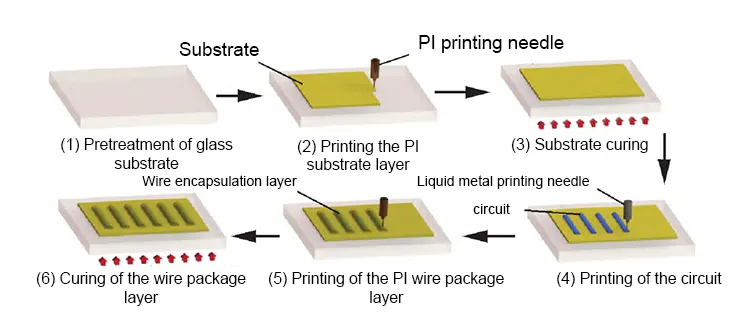
Fig. 1 Flexible circuit sample preparation process
The specific workflow is as follows:
Step 1: Pre-treat the glass substrate.
Clean the glass substrate with anhydrous ethanol, then dry it in an 80°C vacuum oven for 5 minutes. Flatten and adhere the glass substrate to the printing substrate.
Step 2: Print the PI base layer.
Set appropriate flow rate and cycle parameters to ensure formation of an ideal liquid film morphology.
Step 3: Cure the PI base.
Perform isothermal heating curing under strictly controlled temperature and time conditions to achieve the desired imidization level and surface morphology.
Step 4: Print the circuit.
After adjusting printing parameters, activate the electrohydrodynamic inkjet 3D printing equipment to print liquid metal material, completing the fabrication of the flexible circuit.
Step 5: Print the PI encapsulation layer.
Set appropriate flow rate, speed, and voltage to print the PI imide encapsulation layer onto the circuit.
Step 6: Encapsulation Layer Curing.
Perform isothermal heating curing under strictly controlled temperature and time conditions to ensure uniform shrinkage of the encapsulation layer while maintaining the circuit morphology.
Fundamental Technical Principles
During flexible circuit manufacturing, the PI base layer is printed using direct material writing technology. As shown in Figure 2, the liquid overcomes viscous forces and surface tension under back pressure and gravity, extruding from the needle tip to form droplets that are precisely deposited onto the substrate.
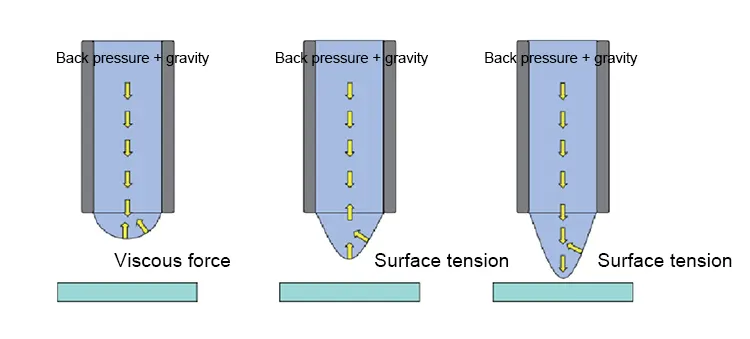
Fig. 2 Material direct writing printing principle
Electrohydrodynamic Jet Printing of Circuits and Encapsulation Layers
As illustrated in Figure 3, circuits and encapsulation layers are printed using electrohydrodynamic jetting.
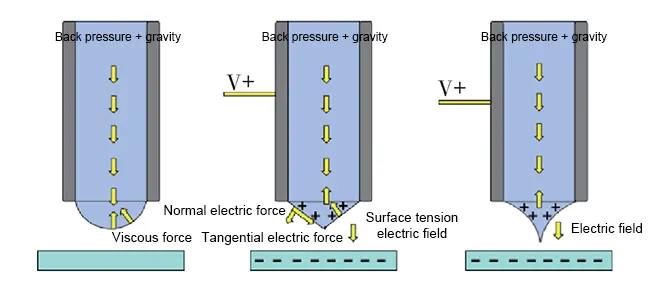
Fig. 3 Printing principle of electrohydrodynamic injection
The needle is held vertically downward to stabilize the jet stream, with the positive electrode connected to the needle tip and the negative electrode connected to the substrate, creating a strong electric field.
The electric field causes the liquid at the needle tip to accumulate charge, gradually forming a Taylor cone.
When the electric field strength is sufficiently high, the electric force overcomes the liquid’s surface tension and viscous forces, generating a fine jet.
During movement, the jet splits into minute droplets that ultimately deposit onto the substrate, forming the desired circuit or encapsulation layer.
Circuit Settlement and Leakage in Surface Encapsulation
Figure 4 reveals the settlement leakage process of the circuit under surface encapsulation and the cross-sectional morphology of the circuit after thermal curing. Initially, the liquid metal circuit is precisely printed onto the PI substrate [Figure 4(a)].

Fig. 4 Sedimentation leakage process of the circuit under surface package and the cross section morphology of the circuit after heat curing
Subsequently, surface encapsulation and heating are performed [Figure 4(b)].
The PI substrate rapidly softens and then completely dissolves due to immersion in excess solvent molecules, causing the circuit to sink sharply [Figure 4(c)].
Ultimately, the liquid metal begins to leak out of the substrate layer [Figure 4(d)], threatening the integrity and stability of the flexible circuit.
The dissolution process ceases after thermal curing, halting circuit settling and leakage [Fig. 4(e)].
Figure 4(f) shows an SEM image revealing the cross-sectional morphology of the circuit under surface encapsulation.
Controlled Circuit Settlement with Wire Encapsulation
Figure 5 illustrates the settling process of the circuit under wire encapsulation and its cross-sectional morphology after thermal curing.

Fig. 5 The sedimentation process of the circuit in wire package and the cross section morphology of the circuit after heat curing
The initial liquid metal circuit is printed onto a PI substrate [Figure 5(a)]. Line encapsulation is then performed, followed by heating [Figure 5(b)].
Subsequently, the PI substrate is immersed in an appropriate amount of solvent molecules to soften and dissolve [Figure 5(c)].
The line encapsulation ensures quantitative encapsulation of the PI solution, facilitating controlled circuit settlement and fusion between the substrate and encapsulation layer.
Upon complete solvent depletion, substrate softening and dissolution cease, halting circuit deposition.
The circuit remains largely fixed in position, though the PI substrate remains uncured [Figure 5(d)].
Final thermal curing fixes the liquid metal position, forming a stable circuit structure [Figure 5(e)].
Figure 5(f) shows the cross-sectional morphology of the circuit under wire encapsulation.
Key Mechanism of Wire-Encapsulation Technology
The key to wire-packaging technology lies in regulating the line width of the liquid PI encapsulation layer to control substrate dissolution and thereby modulate circuit deposition.
This lays the foundation for further controlling circuit deposition by adjusting the imidization degree of the PI substrate in subsequent steps.
Results and Discussion
Control of Circuit Sinking
A comparison before and after circuit sinking is shown in Figure 6. The degree of imidization of the PI substrate layer and the amount of encapsulation layer applied critically influence liquid metal circuit settlement.
Therefore, the effects of substrate curing process parameters (heating temperature and time) and encapsulation layer line width on circuit settlement were investigated (Figure 7).
To control variables, the circuit line width was uniformly set at 150 (±5) μm.

Fig. 6 Comparison before and after circuit settlement

Fig. 7 Influence of process parameters on circuit settlement rate
Settlement Rate Calculation Method
Defined the formula for calculating the settlement rate:

Formula 1
In the formula:
H——Settlement rate, %
h1——Initial height, μm, as shown in Figure 6(a)
h2——Final height after settlement, μm, as shown in Figure 6(b)
Effect of Heating Temperature and Time
Figures 7(a) and (b) illustrate the effects of heating temperature and duration on circuit settlement in the PI substrate layer.
The encapsulation layer has a line width of 2 mm. At a heating time of 6 hours, increasing the temperature from 40°C to 80°C reduced the settlement rate from 85% to 8%. At 60°C, extending the heating time from 4 hours to 8 hours decreased the circuit settlement rate from 23% to 10%.
This indicates that as heating time and temperature increase, the substrate undergoes more thorough thermo-imidization, resulting in a more stable structure and enhanced support for the circuit. The circuit settlement rate decreased from 86% to 23%.
This indicates that as heating time and temperature increase, the substrate undergoes more thorough thermo-imidization, resulting in a more stable structure that provides enhanced support to the circuit and reduces the settlement rate.
Effect of Encapsulation Layer Line Width
Figure 7(c) reveals the relationship between the line width of the encapsulation layer and circuit settlement.
At 60°C and 6 hours, increasing the line width from 1.0 mm to 3.00 mm resulted in a rise in circuit settlement rate from 12% to 49%.
Increased line width implies higher PI solution consumption during encapsulation, intensifying the solution’s dissolution effect on the substrate layer.
This leads to a loosening of the substrate structure, weakening its circuit support function and consequently increasing the settlement rate.
Figure 7(d) shows the surface morphology of circuit settlement under SEM imaging.
The lowest controlled circuit settlement rate of 8% demonstrates that rational process coordination can significantly enhance the performance and quality of circuit encapsulation.
Effect of Process Parameters on PI Substrate Layer
The thickness and surface roughness of the PI substrate layer directly impact circuit printing quality as well as device comfort and thinness.
To ensure stable formation of the PI substrate layer and high-quality printing, it is necessary to investigate the effects of printing flow rate and cycle time on substrate layer thickness and surface roughness (Figure 8).
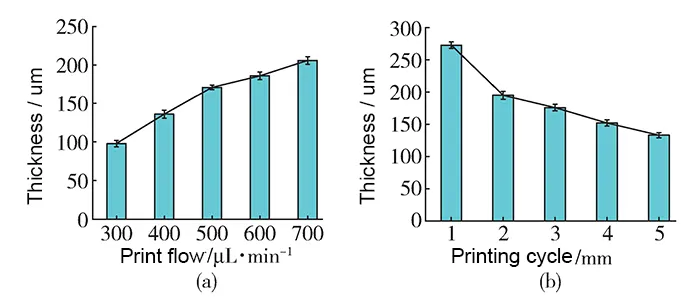
Fig. 8 Influence of process parameters on the thickness of PI base layer
Effect of Printing Parameters on PI Substrate Thickness
By exploring printing parameters, high-quality PI substrate layer printing can be achieved. Figure 8(a) shows that the thickness increases with rising print flow rate (300–700 μL/min).
An appropriate flow rate ensures continuous, stable substrate printing and surface smoothness.
Figure 8(b) illustrates the effect of stroke length (1–5 mm) on thickness. Results indicate that increasing stroke length consistently reduces thickness.
When exceeding 5 mm, print continuity is compromised, solution leveling becomes difficult, and a smooth film surface cannot be formed.
Formation Mechanism of the PI Base Layer
The surface roughness of the PI substrate layer is a critical indicator of print quality, significantly influenced by the print cycle and flow rate.
During printing, as shown in Figure 9, the liquid PI merges along the grid path to form a surface.
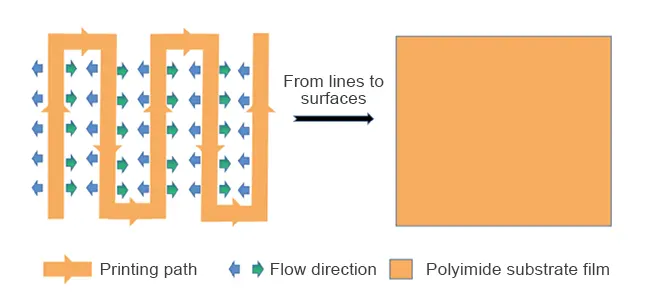
Fig. 9 Film formation principle of liquid PI base layer
Effect of Printing Cycle on Surface Roughness
As shown in Figure 10, the study investigated the effect of printing cycle (1–5 mm) on the surface roughness of the PI substrate layer, with a printing flow rate set at 500 μL/min.
Figure 10[(a)–(e)] depicts the CLM scanning topography of the substrate layer at different printing cycles.
As illustrated in Figure 10(f), surface roughness progressively increases with longer printing cycles. Increasing the printing cycle widens the line-to-line spacing.
If the solution’s flowability is insufficient to bridge the enlarged spacing, it impedes the leveling of the liquid film, leading to increased surface roughness.
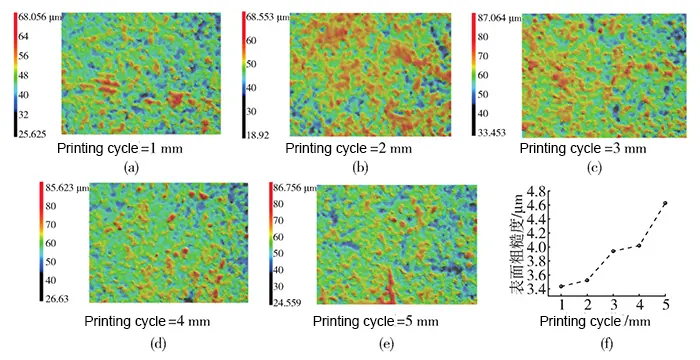
Fig. 10 Influence of printing cycle on surface roughness of PI base layer
Effect of Printing Flow Rate on Surface Roughness
As shown in Figure 11, the effects of a printing cycle of 3 mm and printing flow rates (300–700 μL/min) on the surface roughness of the PI substrate layer were investigated. Figures 11(a) to (e) display the CLM scanning topography of the substrate layer at different printing cycles.
As shown in Figure 11(f), surface roughness progressively increases with higher printing flow rates.
The most pronounced increase occurred at 700 μL/min, where the color contrast in the CLM scanning morphology (Figure 11(e)) was most vivid, clearly indicating a significant rise in substrate surface roughness.
Excessive printing flow rates abnormally increase liquid film thickness, leading to uneven shrinkage during heating and curing, which in turn exacerbates roughness.
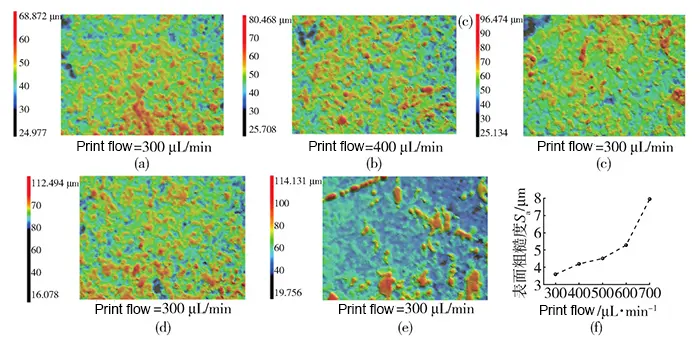
Fig. 11 Influence of print flow on surface roughness of PI base
Impact of Process Parameters on Circuit and Package Layer Line Width
Process parameters critically influence the line width of circuits and package layers. Therefore, the system systematically investigated the effects of printing voltage, flow rate, and speed (see Figures 12 and 13).
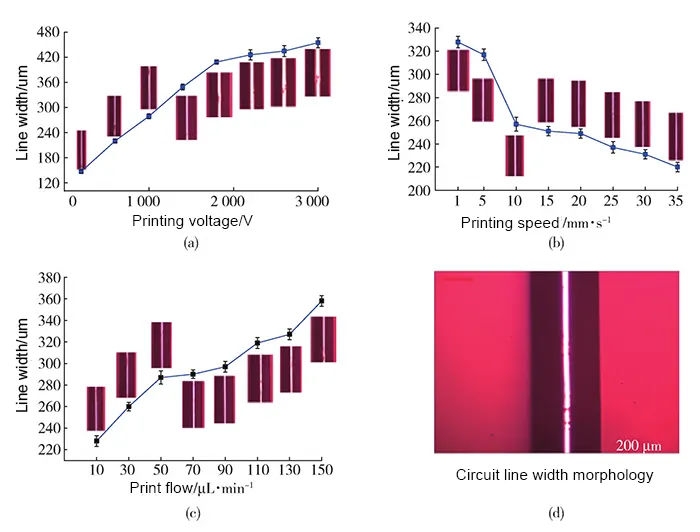
Fig. 12 Influence of process parameters on circuit width

Fig. 13 Influence of process parameters on line width of package layer
Printing voltage is critical for forming the Taylor cone jet and significantly affects the line width of circuits and encapsulation layers. As shown in Figure 12(a) and Figure 13(a), controlling the speed and flow rate parameters, the line width increases with higher voltage.
An appropriate voltage increase enhances the traction force exerted by the electric field on the liquid material, thereby ejecting more material onto the substrate.
As shown in Figure 12(b) and Figure 13(b), controlling voltage and flow rate parameters.
Line width decreases with increasing speed. Excessive speed leads to insufficient material supply, preventing continuous printing.
As shown in Figure 12(c) and Figure 13(c), controlling voltage and speed parameters. Line width increases with flow rate.
Higher flow rates result in a relative increase in extruded liquid material per unit time, leading to greater coverage area of material deposited on the substrate and consequently wider line widths.
Figure 12(d) specifically shows the line width morphology of the circuit under optical microscopy, while Figure 13(d) displays the morphology of the encapsulation layer under electron microscopy.
Electrical Stability of Flexible Circuits
The electrical stability of flexible circuits on PI substrates under bending conditions was investigated. Samples were clamped onto a testing machine for bending experiments.
As shown in Figure 14, L represents the original length of the flexible circuit sample, and d denotes the bending diameter of the circuit. Resistance changes were measured using an ohmmeter.
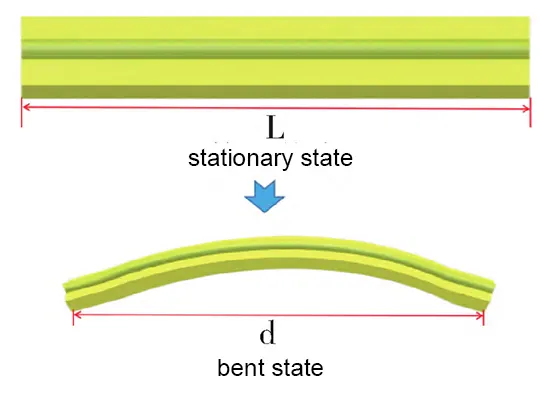
Fig. 14 Bending cycle test principle
The printed sample had a test length of 4 cm. The team conducted bending tests within a bending diameter range of 3.5–2 cm, repeating each test cycle 100 times. Figure 15 shows the results.
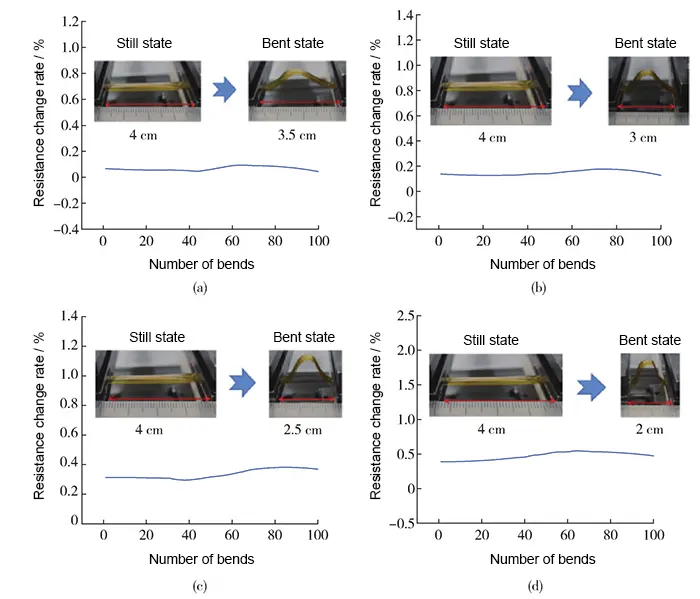
Fig. 15 Resistance change rate of flexible circuit under different bending states
Under bending deformation, the overall resistance change of the circuit remained minimal, and the resistance returned to its original value after each release of bending deformation.
In Figure 15(a), with a bending diameter of 3.5 cm, the resistance change rate ranged from 0.05% to 0.09%. Subsequently, in Figure 15(b), with a bending diameter of 3 cm, the resistance change rate ranged from 0.13% to 0. 18%.
Subsequently, at a bending diameter of 2.5 cm (Figure 15(c)), the resistance change rate ranged from 0.29% to 0.38%.
Finally, at a bending diameter of 2 cm (Figure 15(d)), the resistance change rate ranged from 0.40% to 0.54%.
The results of the bending cycle test indicate that the resistance change rate of the flexible circuit under cyclic bending strain does not exceed 0.54%, and the resistance change remains relatively constant within the same bending diameter.
This demonstrates that the manufactured flexible circuit maintains high stability even after repeated bending at different degrees.
Electrical Stability Under Torsion Conditions
The study clamped PI-based flexible circuit samples in a testing machine to investigate their electrical stability under torsion, as shown in Figure 16.
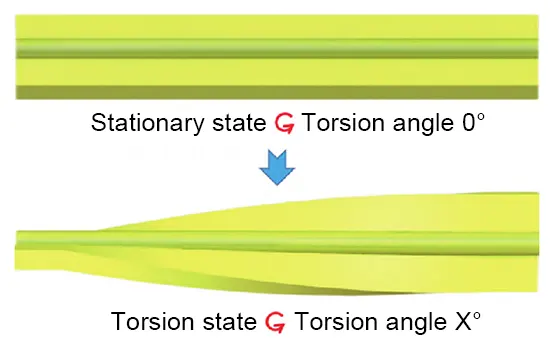
Fig. 16 Principle of the torsional loop test
Circuit samples underwent 100 cyclic torsions at various angles within the 90°–360° range, as illustrated in Figure 17.
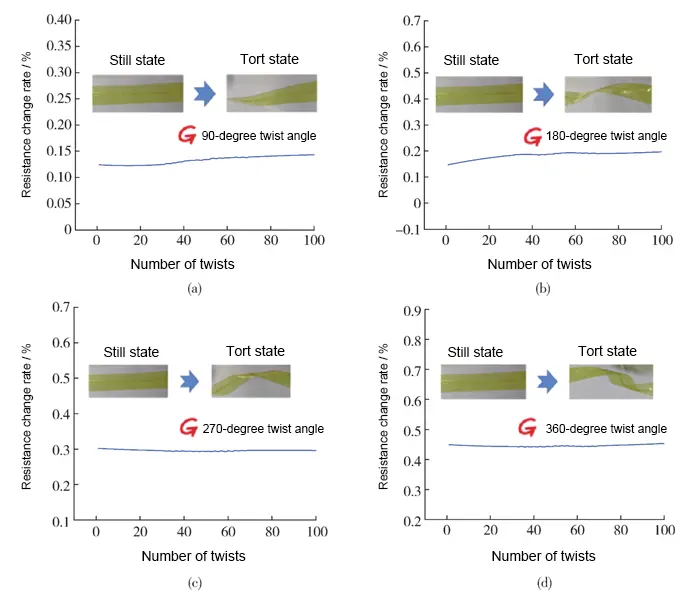
Fig. 17 Resistance change rate of flexible circuit under different torsion states
Resistance changes remained negligible throughout torsion, with values consistently reverting to baseline after each cycle, further demonstrating exceptional electrical stability and reliability.
Resistance variations exhibited high consistency across hundreds of cycles at various angles, showing virtually no fluctuation from the original resistance value.
Torsion Test Results and Electrical Performance
Specifically: At 90° torsion [Figure 17(a)], the resistance change rate remained low at 0.12%–0.14%; At 180° torsion [Figure 17(b)], the resistance change rate slightly increased to 0.15%–0.19%.
At 270° torsion [Figure 17(c)], the resistance change rate increased to 0.29%–0.30%; at 360° torsion [Figure 17(d)], the resistance change rate reached its maximum but remained only 0.44%–0.45%.
The torsion cycle test demonstrates that the resistance change rate of the flexible circuit remains below 0.45% under cyclic torsion strain, with highly stable resistance variation at the same angle.
After enduring multiple torsion cycles of varying degrees, the flexible circuit maintains excellent stability and durability.
Application
Based on the above discussion, it is feasible to directly print wire-bonded flexible circuits using material direct-write combined with electrohydrodynamic jet 3D printing technology.
Using the aforementioned manufacturing method and process, the team designed and fabricated a PI-based flexible LED circuit board, as shown in Figure 18.
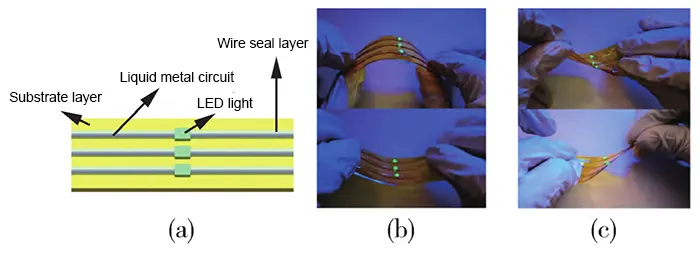
Fig. 18 PI‐based flexible LED circuit board
Figure 18(a) presents a schematic diagram of the PI-based flexible LED circuit board structure.
After thermal curing, the process completes the electronic device fabrication.
First, as shown in Figure 18(b), during bending tests in various directions, all three LEDs maintained stable illumination with highly consistent brightness.
Subsequently, as depicted in Figure 18(c), when subjected to torsion tests in different orientations, the three LEDs remained fully illuminated with brightness consistently preserved.
This demonstrates the device’s outstanding flexibility under complex deformation conditions, stable circuit connections, and exceptional mechanical durability.
Conclusion
(1) By regulating the line width of the encapsulation layer and the degree of imidization of the substrate, the process controlled substrate dissolution. This effectively managed the settlement of liquid metal circuits, achieving a lowest settlement rate of 8%.
This controlled settling stabilized the circuit’s position within the PI substrate, providing robust assurance for proper encapsulation and stable circuit operation.
(2) First, the study investigated the effects of print flow rate and cycle on PI substrate layer thickness and surface roughness.
Subsequently, the study explored the impacts of print voltage, speed, and flow rate on liquid metal circuit width and PI encapsulation layer line width.
By analyzing the trends in printing parameter effects, this provided crucial assurance for high-quality printing of the PI substrate layer, circuit layer, and encapsulation layer.
(3) After 100 cycles of bending at different diameters, the resistance change rate of the circuit samples did not exceed 0.54%; after 100 cycles of torsion at different angles, the resistance change rate did not exceed 0.45%.
In practical bending and torsion tests of PI-based flexible LED circuit boards in various orientations, all three LEDs maintained stable luminous states with highly consistent brightness.
Both electrical stability testing and practical applications demonstrate that the manufactured electronic devices exhibit excellent stability, high flexibility, and superior adaptability, confirming the feasibility and superiority of this technology.