
Flex PCB Impedance Control Design: Ensuring Precision in High-Frequency Applications
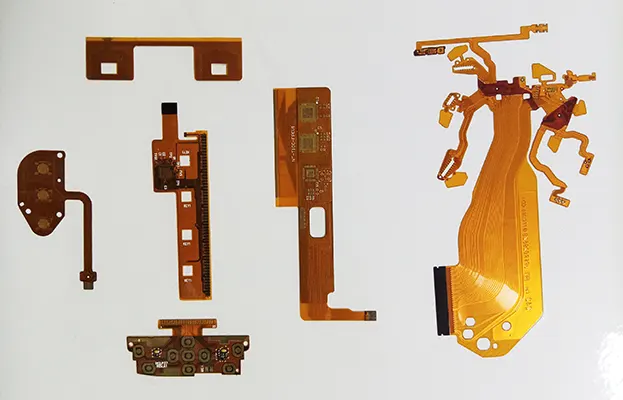
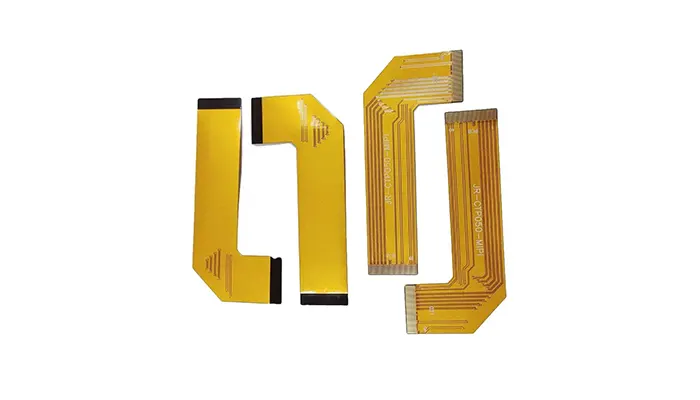
Flexible printed circuit boards (Flex PCBs) have become essential in modern electronics due to their ability to support miniaturization, complex 3-dimensional routing, and high-speed signal transmission.
As technologies such as 5G, automotive radar systems, and wearable medical devices evolve, maintaining controlled impedance in flex circuits is no longer optional—it is fundamental to system reliability and signal integrity.
Unlike traditional rigid boards made from FR-4, flex PCBs use thin polyimide substrates that introduce additional electrical and mechanical complexities.
At high frequencies, PCB traces behave like transmission lines, and any mismatch in impedance can lead to severe signal degradation.
This article explains the electrical fundamentals of impedance control in flex PCBs, why it is more challenging than rigid PCB design, and which parameters designers must carefully control.
1. Why Impedance Control Matters in Modern Electronics
Miniaturization and High-Speed Interfaces
Modern electronic systems increasingly rely on high-speed serial interfaces such as:
USB
PCI Express
HDMI
These interfaces typically operate at multi-gigabit data rates, where signal edges occur in the picosecond to nanosecond range. At these speeds, PCB traces behave as distributed transmission lines, not simple conductors.
If impedance is not controlled, the result can include:
signal reflections
electromagnetic interference
degraded eye diagrams
increased bit error rates
Transmission Line Behavior
When the signal rise time (Tr) becomes comparable to the propagation delay of the PCB trace, transmission line effects dominate.
A practical rule:

Where:
| Symbol | Description |
|---|---|
| (Tr) | signal rise time |
| (c) | speed of light |
| (\varepsilon_r) | dielectric constant |
If this condition is met, impedance control is required.
Market Drivers
Controlled impedance flex PCBs are rapidly growing in industries such as:
| Industry | Application | Typical Frequency |
|---|---|---|
| Telecommunications | 5G RF modules | 3–40 GHz |
| Automotive | Radar & ADAS sensors | 24–77 GHz |
| Medical | Wearable biosensors | 1–10 GHz |
| Consumer electronics | Foldable phones | >10 Gb/s signals |
2. What Is Controlled Impedance in a Flex PCB?
Controlled impedance refers to designing PCB traces such that the characteristic impedance (Z₀) remains constant along the transmission path.
2.1 Electrical Fundamentals
The characteristic impedance of a transmission line is defined as:

Where:
| Parameter | Meaning |
|---|---|
| (L) | inductance per unit length |
| (C) | capacitance per unit length |
In a PCB trace:
capacitance is determined by dielectric thickness and permittivity
inductance is determined by trace geometry and current return paths
Microstrip Impedance Approximation
For a microstrip trace:

Where:
| Parameter | Description |
|---|---|
| (h) | dielectric thickness |
| (w) | trace width |
| (t) | copper thickness |
| (ε_r) | dielectric constant |
Consequences of Impedance Mismatch
When a signal encounters an impedance discontinuity:
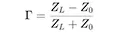
Where:
| Symbol | Meaning |
|---|---|
| (Z_L) | load impedance |
| (Z_0) | line impedance |
| (Γ) | reflection coefficient |
Effects include:
Reflections
Crosstalk
Eye diagram closure
Reduced signal-to-noise ratio
2.2 Single-Ended vs Differential Impedance
Single-Ended Signals
A single conductor referenced to ground.
Typical value:
| Interface | Impedance |
|---|---|
| RF lines | 50 Ω |
| clock signals | 50–60 Ω |
Differential Signals
Two conductors carrying opposite signals.
Typical standards:
| Interface | Differential Impedance |
|---|---|
| LVDS | 100 Ω |
| USB | 90 Ω |
| CAN bus | 120 Ω |
Differential impedance:
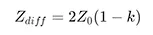
Where:
| Parameter | Meaning |
|---|---|
| (k) | electromagnetic coupling coefficient |
Because flex substrates are thin and flexible, coupling between differential pairs is often stronger than in rigid boards, which changes impedance behavior.
3. Why Flex PCB Impedance Control Is More Complex Than Rigid PCB
Flex PCB impedance control introduces additional variables not present in rigid boards.
Key Challenges
1. Extremely Thin Dielectrics
Flex polyimide thickness can be:
| Layer Type | Typical Thickness |
|---|---|
| Core polyimide | 12–50 μm |
| Adhesive | 12–25 μm |
This makes impedance extremely sensitive to small manufacturing tolerances.
2. Mechanical Bending Effects
When flex circuits bend:
dielectric thickness changes
copper trace geometry distorts
impedance can shift by 5–10%
3. Adhesive Layers
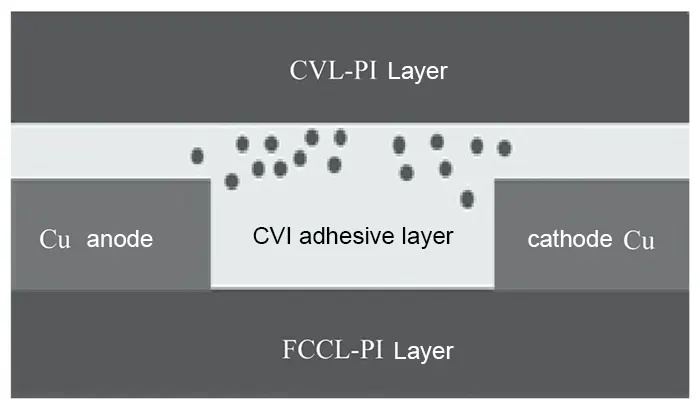
Many flex constructions include adhesive bonding layers, which have:
higher dielectric loss
inconsistent thickness
These layers alter the effective dielectric constant.
4. Cross-Hatched Ground Planes
To improve flexibility, ground planes are sometimes cross-hatched instead of solid.
However, this introduces:
impedance variation
increased EMI
reduced shielding effectiveness
Comparison: Rigid vs Flex PCB Impedance Control
| Parameter | Rigid PCB | Flex PCB |
|---|---|---|
| Base material | FR-4 | Polyimide |
| Dielectric thickness | 100–300 μm | 12–50 μm |
| Adhesive layers | Rare | Common |
| Ground planes | Solid | Often cross-hatched |
| Mechanical deformation | None | Frequent bending |
| Impedance tolerance | ±10% typical | ±5% often required |
4. Key Design Parameters That Determine Flex PCB Impedance
4.1 Trace Geometry
Trace geometry strongly influences inductance and capacitance.
Trace Width
Increasing width:
decreases impedance
increases capacitance
Example (polyimide dielectric):
| Trace Width | Approx Impedance |
|---|---|
| 75 μm | ~60 Ω |
| 100 μm | ~50 Ω |
| 150 μm | ~40 Ω |
Trace Spacing (Differential Pairs)
Closer spacing increases coupling.
| Pair Spacing | Differential Impedance |
|---|---|
| 200 μm | ~110 Ω |
| 150 μm | ~100 Ω |
| 100 μm | ~90 Ω |
Copper Thickness
Typical options:
| Copper Weight | Thickness |
|---|---|
| ½ oz | 17 μm |
| 1 oz | 35 μm |
Thicker copper slightly reduces impedance because it increases effective trace width.
4.2 Dielectric Structure
Polyimide Thickness
Polyimide dielectric constant:

Increasing dielectric thickness increases impedance.
Adhesive Thickness
Adhesive layers typically have:
| Property | Value |
|---|---|
| Dielectric constant | 3.5–4.2 |
| Loss tangent | 0.02–0.04 |
Because adhesives vary between manufacturers, they introduce impedance uncertainty.
5. Flex PCB Stack-Up Strategies for Controlled Impedance
Stack-up architecture is the single most influential factor in determining impedance stability, EMI behavior, and mechanical flexibility in flex PCB design. Because flexible circuits use thin dielectric layers and must tolerate bending, stack-up planning must balance electrical control with mechanical durability.
5.1 Microstrip Configuration (Preferred for Flex Zones)
A microstrip configuration places the signal trace on the outer layer above a reference ground plane. This is the most common structure in two-layer flex PCBs.
Typical 2-Layer Flex Microstrip Stack
| Layer | Material | Typical Thickness |
|---|---|---|
| Coverlay | Polyimide | 12–25 µm |
| Signal layer | Copper | 12–18 µm |
| Dielectric core | Polyimide | 25–50 µm |
| Ground plane | Copper | 12–18 µm |
Embedded Microstrip
In some designs, an additional dielectric layer is placed over the signal trace to improve impedance consistency and environmental protection.
Advantages
Thinner overall construction
Superior bend radius performance
Lower manufacturing cost
Simplified fabrication
Limitations
Limited EMI shielding
Greater sensitivity to environmental variation
Higher radiation compared to stripline
For dynamic flex regions (such as hinges or folding assemblies), microstrip is typically preferred because it minimizes stiffness.
5.2 Stripline Configuration
A stripline structure sandwiches the signal trace between two reference planes. This configuration requires at least a three-layer flex construction.
Typical Stripline Stack
| Layer | Function |
|---|---|
| Ground plane | Reference |
| Dielectric | Insulation |
| Signal layer | High-speed routing |
| Dielectric | Insulation |
| Ground plane | Reference |
Advantages
Excellent EMI containment
Reduced crosstalk
Stable impedance environment
Less sensitivity to external interference
Drawbacks
Increased thickness
Reduced flexibility
Higher material and fabrication cost
Compared with microstrip, stripline stack-ups often increase total thickness by approximately 60–70%, which significantly impacts bending performance.
5.3 Hybrid Rigid-Flex Strategy
Many advanced systems adopt a hybrid architecture using a Rigid-flex PCB. In this configuration:
High-speed routing is performed in the rigid section
The flex portion serves as a controlled interconnect
Critical impedance transitions are engineered carefully
Managing Rigid-to-Flex Transitions
Key design considerations include:
Maintaining continuous reference planes
Avoiding abrupt trace width changes
Minimizing via transitions
Using simulation to evaluate impedance discontinuities
Poor transition control often produces reflections and localized signal degradation.
6. Thickness vs Flexibility: The Engineering Trade-Off
Impedance control often requires thicker dielectric layers to achieve target impedance values. However, increasing thickness directly increases stiffness.
Standard Thin Flex vs Controlled Impedance Flex
| Design Type | Typical Thickness | Flexibility |
|---|---|---|
| Standard thin flex | 50–70 µm | Excellent |
| Controlled impedance microstrip | 90–150 µm | Good |
| Multilayer stripline flex | 150–250 µm | Moderate to limited |
Even modest increases in total thickness significantly increase bending stiffness because rigidity rises rapidly as thickness increases.
Minimum Bend Radius Considerations
Bend radius guidelines vary depending on whether the flex region is static or dynamic:
| Application | Recommended Bend Radius |
|---|---|
| Static bend | 6–10× total thickness |
| Dynamic bend | 10–20× total thickness |
Dynamic applications (such as foldable devices or moving assemblies) require more conservative mechanical design to prevent copper fatigue and dielectric cracking.
Practical Comparison Example
| Configuration | Layers | Approximate Thickness | Flexibility |
|---|---|---|---|
| 2-layer thin flex | 2 | ~60 µm | Excellent |
| 2-layer microstrip controlled impedance | 2 | ~110 µm | Good |
| 3-layer stripline controlled impedance | 3–4 | ~180 µm | Moderate |
This comparison illustrates the unavoidable trade-off between electrical control and mechanical compliance.
7. Material Selection for High-Frequency Flex Applications
Material properties directly influence dielectric stability, insertion loss, and long-term reliability.
7.1 Polyimide (PI)
Polyimide is the most widely used substrate material for flex PCBs.
Typical Electrical Properties
| Property | Value |
|---|---|
| Dielectric constant (Dk) | 3.2–3.4 |
| Loss tangent | 0.002–0.004 |
| Operating temperature | −200°C to 300°C |
Advantages
Excellent mechanical durability
High thermal resistance
Cost-effective manufacturing
Mature supply chain
Polyimide remains suitable for most consumer, industrial, and automotive flex applications.
7.2 LCP (Liquid Crystal Polymer)
Liquid Crystal Polymer is increasingly used in high-frequency and millimeter-wave designs.
Typical Electrical Properties
| Property | Value |
|---|---|
| Dielectric constant | 2.9–3.1 |
| Loss tangent | <0.002 |
| Moisture absorption | <0.04% |
Advantages
Very low dielectric loss
Stable dielectric constant across frequency
Minimal moisture absorption
Strong dimensional stability
LCP is well suited for:
Millimeter-wave antenna modules
Automotive radar
Aerospace RF systems
Advanced 5G front-end modules
7.3 Thermal Effects on Impedance
Temperature variations influence dielectric properties and therefore impedance stability.
Temperature Considerations
| Industry | Operating Range |
|---|---|
| Automotive | −40°C to 150°C |
| Aerospace | −55°C to 200°C |
| Industrial | −40°C to 125°C |
As temperature rises, dielectric constant typically increases slightly, which reduces characteristic impedance. Materials with low dielectric drift are preferred for high-reliability environments.
8. Via Structures and Impedance Discontinuity
Vias introduce localized discontinuities in high-speed signal paths.
Why Vias Disrupt Impedance
Primary causes include:
Additional parasitic inductance
Stub capacitance
Reference plane interruption
Return path distortion
These effects become increasingly significant at multi-gigabit data rates.
Mitigation Strategies
Blind Vias
Connect outer layers to inner layers without traversing the entire stack.
Benefits:
Reduced stub length
Improved high-frequency performance
Buried Vias
Located entirely within inner layers.
Benefits:
Minimal external discontinuity
Better signal containment
Via-in-Pad
Used in high-density or high-speed BGA layouts.
Benefits:
Shortest electrical path
Reduced reflection
Trade-off: Higher manufacturing cost and tighter process control.
9. DFM and Manufacturing Control for Impedance Accuracy
Design alone does not guarantee impedance accuracy. Process control and statistical validation are equally critical.
9.1 Manufacturing Tolerances
Key fabrication variables:
| Parameter | Typical Tolerance |
|---|---|
| Trace width | ±10% |
| Dielectric thickness | ±10% |
| Copper thickness | ±5 µm |
| Adhesive flow variation | Process-dependent |
Small dimensional shifts can produce 5–15% impedance deviation.
9.2 Simulation & Statistical Modeling
Electromagnetic field solvers are used to predict impedance before fabrication.
Common tools include:
| Tool | Primary Use |
|---|---|
| ANSYS HFSS | 3D field analysis |
| Keysight ADS | RF and microwave modeling |
| Cadence Sigrity | Signal integrity verification |
Monte Carlo analysis is frequently used to evaluate the statistical impact of manufacturing tolerances and optimize stack-up parameters before production release.
9.3 Testing & Validation
Production validation typically relies on Time Domain Reflectometry (TDR).
Validation Methods
Dedicated impedance test coupons fabricated on each panel
Step-response testing to detect discontinuities
Statistical batch validation
Typical Acceptance Criteria
| Target Impedance | Acceptable Range |
|---|---|
| 50 Ω | ±5–10% |
| 90 Ω | ±10% |
| 100 Ω | ±10% |
10. EMI Shielding in Impedance-Controlled Flex Circuits
Electromagnetic interference (EMI) becomes a major concern when high-speed or RF signals travel through flexible circuits.
Because flex PCBs often use thin dielectric layers and exposed routing structures, proper shielding techniques are required to maintain signal integrity and regulatory compliance.
Structural Shielding (Stripline)
The most effective shielding technique is structural: routing signals in a stripline configuration between two reference planes.
Benefits include:
Strong electromagnetic containment
Reduced radiation and susceptibility
Improved impedance stability
Lower crosstalk between adjacent traces
Stripline structures are widely used in RF modules and high-speed digital interfaces operating above several gigahertz.
However, this approach increases stack-up thickness and reduces flexibility, so it is typically applied only in areas where bending is minimal.
Copper Shielding Layers
Another common approach is to add dedicated shielding copper layers above or below sensitive signal traces.
Typical shielding strategies include:
| Shielding Method | Description | Application |
|---|---|---|
| Solid ground plane | Continuous copper layer | High-speed digital signals |
| Shield layer with vias | Grounded shielding mesh | RF modules |
| Top shielding foil | Additional copper foil | EMI-critical environments |
Copper shielding also improves return-current continuity, which stabilizes impedance.
Cross-Hatching Technique
Flex circuits sometimes use cross-hatched ground planes instead of solid copper planes.
Why Cross-Hatching Is Used
Flexibility improves when copper coverage is reduced. A grid or mesh structure allows the flex region to bend more easily.
Trade-Offs
| Advantage | Disadvantage |
|---|---|
| Better bending capability | Reduced shielding effectiveness |
| Lower mechanical stress | Slight impedance variation |
| Lower copper stiffness | Increased EMI leakage |
Designers must carefully balance mechanical flexibility and electromagnetic containment when using cross-hatched planes.
Why Silver Ink Shielding Is Outdated
Earlier flex circuits sometimes used silver conductive ink as a shielding layer.
However, this method has largely been replaced due to several drawbacks:
Higher electrical resistance compared with copper
Reduced long-term reliability
Susceptibility to cracking under repeated bending
Poor compatibility with high-frequency signals
Modern designs prefer copper foil shielding or laminated ground planes for consistent electrical performance.
11. Application Areas Where Precision Impedance Matters Most
Controlled impedance in flex PCBs is particularly critical in industries where high-speed communication, RF performance, or extreme reliability is required.
11.1 5G and RF Systems
Modern wireless systems rely on high-frequency communication technologies such as 5G.
Typical requirements:
| Parameter | Typical Value |
|---|---|
| Frequency bands | 3–40 GHz |
| Signal impedance | 50 Ω |
| Differential pairs | 90–100 Ω |
Applications include:
phased array antennas
RF front-end modules
base station transceivers
Flex PCBs allow compact antenna interconnections and three-dimensional routing.
11.2 Automotive Radar and ADAS
Modern vehicles rely heavily on radar and sensor systems within Advanced Driver Assistance Systems.
Typical characteristics:
| Radar Type | Frequency |
|---|---|
| Short-range radar | 24 GHz |
| Long-range radar | 77 GHz |
These systems require extremely stable impedance because small variations can significantly degrade signal accuracy.
11.3 Medical Wearables and Implants
Medical electronics often integrate flexible circuits to conform to the human body.
Examples include:
ECG monitoring patches
wearable health sensors
implantable diagnostic devices
Precision impedance control ensures:
stable wireless communication
minimal signal distortion
safe operation in sensitive medical environments.
11.4 Aerospace and Defense
Aerospace systems operate under extreme environmental conditions.
Typical requirements include:
| Parameter | Range |
|---|---|
| Temperature | −55°C to 200°C |
| Vibration | High |
| Reliability | Mission-critical |
Flex circuits reduce weight and enable compact packaging in avionics and satellite systems.
11.5 Industrial Robotics
Modern manufacturing systems increasingly rely on Industrial Robotics.
Flex PCBs support:
moving cable assemblies
high-speed control signals
compact robotic joint wiring
Dynamic bending and high-speed communication make impedance control essential for long-term reliability.
12. Common Design Mistakes in Flex PCB Impedance Control
Even experienced engineers sometimes encounter impedance issues due to overlooked design factors.
Ignoring Adhesive Thickness
Adhesive layers are common in flex stack-ups and often have dielectric constants different from the polyimide core.
If adhesive thickness is not included in impedance modeling, calculations can deviate significantly from the actual manufactured impedance.
Overusing 1 oz Copper
Thicker copper layers increase trace thickness and reduce impedance.
In flex PCBs, excessive copper thickness also reduces flexibility and increases mechanical stress during bending.
For most impedance-controlled flex designs, ½ oz copper is preferred.
Not Modeling Transition Zones
Transitions between:
rigid and flex sections
connectors
vias
layer changes
can introduce significant impedance discontinuities. Without simulation, these areas often become hidden sources of signal reflection.
Assuming Rigid PCB Calculators Work for Flex
Many online impedance calculators assume rigid materials such as FR-4.
Flex materials such as polyimide or LCP behave differently, especially with adhesive layers and thinner dielectrics.
Using rigid-board assumptions can lead to large design errors.
Overlooking Bend Radius Constraints
Impedance-controlled traces located in tight bend areas can experience:
copper stretching
dielectric compression
trace width distortion
These mechanical effects can alter impedance and cause long-term reliability issues.
13. Practical Design Workflow for Flex PCB Impedance Success
A structured workflow greatly increases the probability of achieving accurate impedance in flex PCB designs.
Step 1 — Define Signal Requirements
Identify key parameters:
data rate or RF frequency
single-ended or differential signaling
target impedance values
EMI requirements
Step 2 — Define Mechanical Constraints
Mechanical parameters strongly affect stack-up decisions.
Consider:
bend radius
static vs dynamic bending
available thickness
connector positions
Step 3 — Select Material System
Choose substrate materials based on electrical and environmental requirements.
Common choices include:
| Material | Typical Applications |
|---|---|
| Polyimide | general flex electronics |
| Liquid Crystal Polymer | high-frequency RF systems |
| PTFE composites | specialized RF designs |
Step 4 — Choose Stack-Up Architecture
Select between:
microstrip flex structures
stripline structures
rigid-flex hybrid architectures
The chosen structure must satisfy both electrical performance and mechanical flexibility requirements.
Step 5 — Model With a Field Solver
Advanced electromagnetic simulation tools such as ANSYS HFSS or Cadence Sigrity help predict impedance before fabrication.
Modeling should include:
trace geometry
dielectric layers
adhesive layers
ground planes
Step 6 — Validate With the Manufacturer
Fabrication capabilities vary between manufacturers.
Important validation steps include:
confirming stack-up feasibility
reviewing copper tolerances
validating dielectric thickness control
confirming impedance tolerance targets
Early collaboration helps avoid costly redesign cycles.
Step 7 — Confirm With TDR Testing
Production boards are verified using Time Domain Reflectometry measurements.
Manufacturers typically fabricate impedance test coupons alongside production panels to ensure the final impedance matches design targets.
14. Conclusion: Balancing Electrical Precision and Mechanical Flexibility
Controlled impedance in flex PCB design requires a multidisciplinary engineering approach.
Successful designs must integrate three key domains:
| Engineering Domain | Key Considerations |
|---|---|
| Electrical | impedance stability, signal integrity, EMI |
| Mechanical | bend radius, dynamic reliability, material fatigue |
| Manufacturing | stack-up tolerances, etching variation, process control |
As modern electronics demand faster data rates and more compact form factors, flex circuits must deliver both electrical precision and mechanical flexibility.
Achieving this balance requires:
careful stack-up engineering
appropriate material selection
accurate electromagnetic modeling
tight manufacturing collaboration
Working with an experienced flex PCB manufacturer early in the design phase dramatically improves the probability of meeting impedance targets, reducing development risk and ensuring long-term product reliability.