
Modern electronic devices are trending toward thinner, lighter, and more highly integrated designs. Consequently, FPC design and the A* algorithm have emerged as key research directions for optimizing flexible circuit board routing.
Flexible circuit boards (FPCs), valued for their bendability, compressibility, and high reliability, are widely adopted in consumer electronics and high-end electronic systems.
However, their routing design demands simultaneous fulfillment of electrical performance and mechanical flexibility within limited space, resulting in high design complexity.
As functionality and integration levels increase, FPC routing must account for signal integrity, current-carrying capacity, and high-frequency characteristics. It must also consider multiple constraints, including stress distribution in bend zones, trace orientation, and component placement [1]
.
Traditional routing methods rely on engineering experience. They often perform inefficiently when confronting multi-constraint, multi-objective problems and struggle to achieve global optimality.
The heuristic A* algorithm abstracts the FPC routing problem into a path-finding task. By introducing a composite cost function and heuristic function, it comprehensively evaluates trace length, corner count, bend penalties, and electrical constraints.
This approach enhances search efficiency while ensuring feasibility.
Essentially, it simulates natural phenomena or processes, such as an ant colony foraging or genetic evolution. It models and optimizes the solution process for complex problems [2]
.
This intelligent search and optimization strategy not only enhances routing design efficiency but also ensures the quality and reliability of design outcomes.
Therefore, applying the heuristic A* algorithm to FPC routing design provides an efficient, intelligent approach for resolving complex routing constraints. It holds significant importance for advancing automation and intelligent design of FPCs.
Overview of Flexible Printed Circuit Board Routing
The schematic diagram of FPC routing is shown in Figure 1. Key components and connectors typically cluster within a central region known as the core routing area. The routing space connecting this core area to other sections forms the extension routing area [3]
.
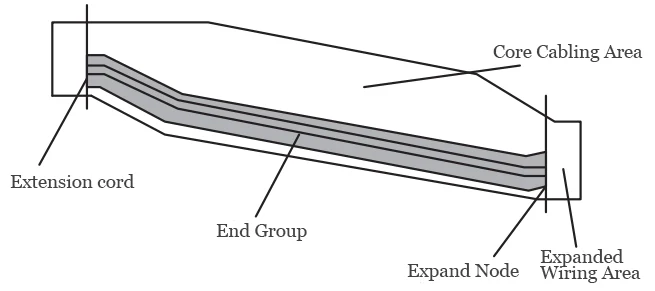
Figure 1: FPC Routing Schematic
The lines connecting these two regions are called extension lines, and the nodes on extension lines connected to core components are called extension nodes.
In the extension routing area of FPC, line networks originating from and returning to the same extension line often form bundles. This arrangement optimizes routing efficiency and resource utilization. These line networks are collectively referred to as bundle groups.
The FPC routing problem can be simplified to routing from core components to extension lines. It also involves achieving an optimized layout of bundle groups in the extension area.
Routing Rules and Optimization Considerations
Wiring harness groups within the core routing area of an FPC is a complex and critical process. Given the boundaries of the core routing area, the starting points of each harness group, and their corresponding extension lines, the path of each conductor within every harness group must be planned carefully.
This ensures all connections remain accurate and error-free. Simultaneously, this routing process must strictly adhere to a series of design rules.
(1) Routing must guarantee precise, error-free connections within each harness group. This means no crossing or overlapping between lines from different harness groups to prevent potential circuit failures.
(2) Due to their unique material and structure, flexible circuit boards typically prohibit drilling holes within the core routing area.
(3) During routing, the width of each line must meet design specifications.
(4) Maintain adequate spacing between metal traces and between traces and the routing area boundaries.
(5) Regarding parameter optimization, flexible PCB routing primarily focuses on routing success rate and routing resource utilization [4]
.
Routing success rate reflects the effectiveness of the automatic routing algorithm, while routing resource utilization impacts the subsequent placement of auxiliary traces such as ground planes and power planes.
Fundamental Principles of the Heuristic A* Algorithm
The heuristic A* algorithm is a clustering method based on local optimization and a search strategy centered on neighboring cluster centers.
Its core principle enhances clustering efficiency and accuracy by intelligently selecting initial cluster centers and restricting the search scope [5]
.
The algorithm begins with dataset preprocessing, first analyzing the local characteristics of data points to identify and mark potential outliers.
Due to their unique properties, these outliers are often unsuitable as cluster centers and should not participate in subsequent clustering processes.
For initial cluster center selection, the heuristic A* algorithm abandons traditional random methods in favor of a “carefully selected” strategy.
Suppose the dataset D is [x1, x2, …, xn], where xi is the ith data point in the dataset and n is the total number of data points.
Select a data point X1c as the first cluster center, where C1 ∈ [1, 2, …, n].
Assume t cluster centers have been selected (ct = [Xc1, Xc2, …, Xct], t < k, where k denotes the desired number of clusters). To select the (t+1)th cluster center, use the following formula:

Formula 1
where: d(Xi, Xcj) denotes the distance function between data point xi and the selected cluster center xcj.
Sort by distance and select the k nearest cluster centers for each cluster center ci to construct the subset Nci:

Formula 2
As shown in Equation (2), for each cluster center ci, the algorithm identifies the k other cluster centers with the smallest distances to ci and places them into the subset Nci.
The algorithm determines the optimal cluster assignment for each data point based on these ‘neighboring cluster center subsets.’ The algorithm repeats this process until the number of clusters remains constant, reaching the predefined upper limit on iterations.
Construction of Flexible Circuit Board Routing Models
When constructing flexible circuit board routing models, a hierarchical layout design is typically employed. Components are divided into functional zones on the board, with spacing adjusted according to signal transmission requirements. Component division for flexible circuit boards is illustrated in Figure 2.
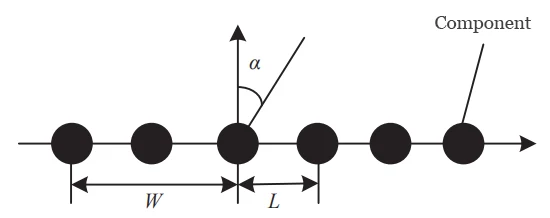
Figure 2: Component Layout on Flexible Printed Circuit Board
In Figure 2, L denotes component spacing, W represents the half-width of the circuit board, and α indicates the placement angle of the component. Assuming all components share identical electrical characteristics—i.e., consistent resistance, capacitance, and inductance values [6]
—designers calculate the routing efficiency BE. They use 1 as the baseline value.

Formula 3
Where: M denotes the number of components, f represents the position-dependent efficiency function, and Pi indicates the position of the i-th component.
When constructing a flexible PCB routing model, routing uniformity is a critical metric. A smaller peak signal loss in the routing model indicates more uniform signal distribution across the board, thereby enhancing overall board performance.
Therefore, this paper sets the optimization objective as minimizing the peak signal loss of the PCB. Peak signal loss is defined as follows:

Formula 4
Where: S denotes the signal loss of the routing, and A represents the average signal loss of all routing segments.
When constructing the flexible circuit board routing model, designers consider the data points xi, the subset Nci of neighboring cluster centers, and the peak signal loss constraint.
Based on these constraints, the constructed flexible circuit board routing model is as follows:
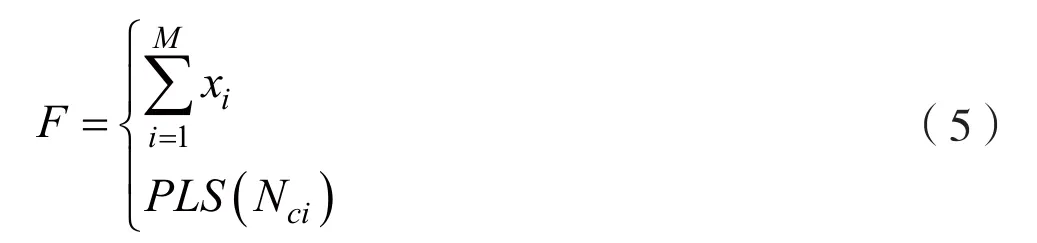
Formula 5
Constructing this model optimizes the flexible circuit board routing while satisfying design requirements and constraints, thereby enhancing the circuit board’s overall performance and reliability.
Flexible Circuit Board Routing Optimization Design
In flexible circuit board routing optimization, designers highly favor the A* algorithm for its superior path-finding capabilities and heuristic search characteristics. To enhance optimization efficiency and quality, they define the search process and heuristic function of the A* algorithm.
The search process begins at the starting point. It maintains the flexible circuit board routing model to preserve nodes awaiting exploration. It also employs a list to prevent redundant searches.
At each iteration step, the A* algorithm selects a node with the lowest estimated cost from the flexible circuit board routing model for expansion. It updates the estimated costs of its neighboring nodes [7]
. The process expresses as follows:

Formula 6
Where: f(n) denotes the total cost estimate of the node. g(n) represents the actual cost from the starting point to the node. h(n) signifies the heuristic estimated cost from the node to the goal point, i.e., the heuristic function.
After defining the heuristic function h(n), the A* algorithm searches for the optimal routing scheme satisfying all constraints.
The algorithm starts from the origin, continuously expands nodes, and calculates f(n) values until finding the target node or determining that no path satisfies the constraints.
During the search, the algorithm selects nodes for expansion based on the magnitude of f(n), ensuring the search direction consistently progresses toward the optimal solution.
Thus, the analysis identifies the optimal routing scheme satisfying all constraints, successfully achieving an optimized design for flexible circuit board routing.
Experiment and Analysis
Flexible printed circuits (FPCs) use flexible materials and feature diverse structures, allowing customization to meet specific application requirements.
Experimental Preparation
Select a suitable flexible substrate material, polyimide (PI) based on experimental needs, with copper (Cu) as the primary conductor material. Choose an appropriate copper thickness according to current-carrying capacity and cost requirements. Select a cover layer material compatible with the substrate to ensure effective protection and weather resistance.
Design the circuit layout according to experimental requirements, determining the number of layers and stack-up structure for the FPC. The flexible circuit board structure is shown in Figure 3.
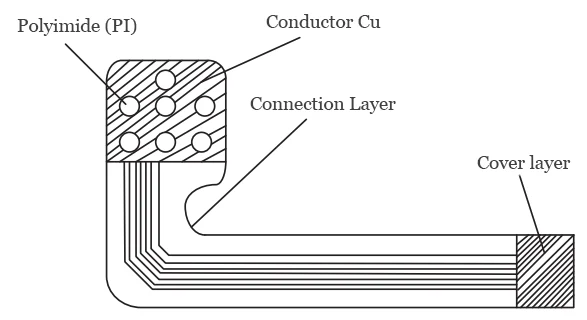
Figure 3: Flexible Circuit Board Structure
The experimental environment includes a high-performance computer equipped with relevant programming and simulation software.
This experiment employs a Python-based heuristic A* algorithm program and utilizes simulation software for FPC routing design simulations. Table 1 lists the experimental environment parameters.

Table 1 Experimental Environment Parameters
Experimental data comprises a series of FPC routing design cases detailed in Table 2, with each case containing circuit board dimensions and routing constraints. To fully validate the effectiveness of the heuristic A* algorithm, the experimental data encompasses FPC routing design cases of varying scales and complexities.
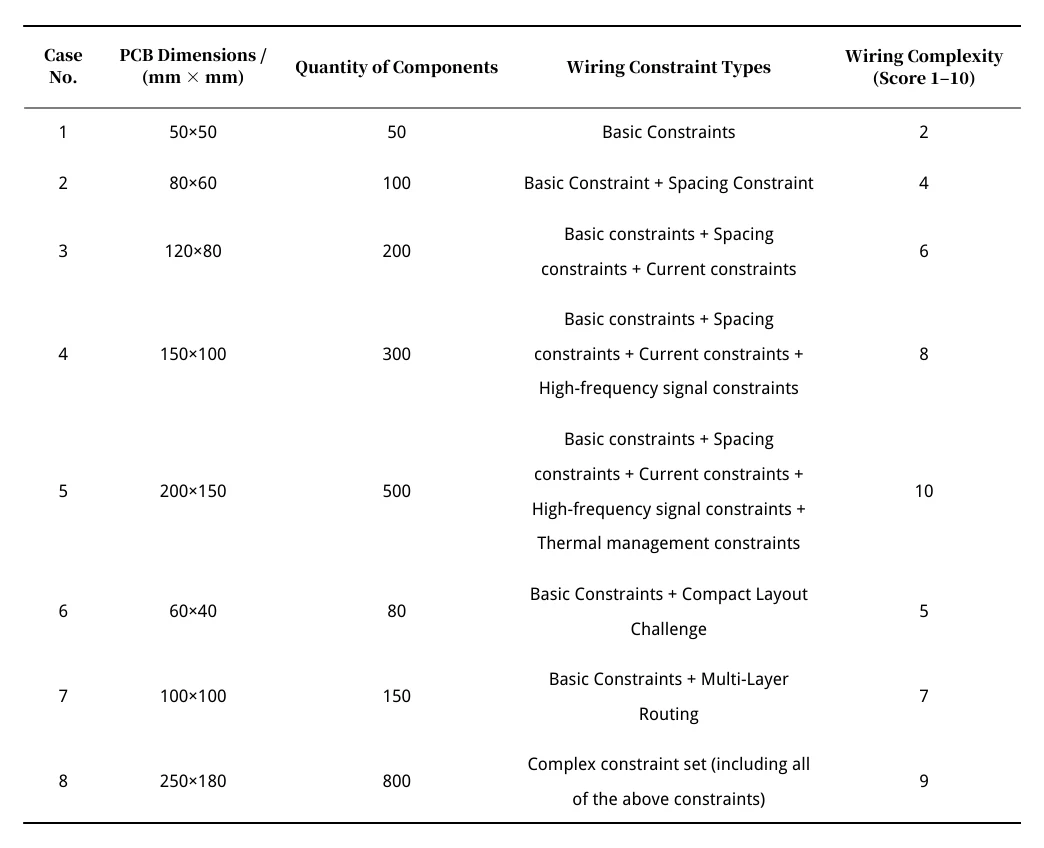
Table 2 FPC Routing Design Examples
Table 2 provides representative FPC routing design cases, covering designs of different scales and complexities.
The experimental program reads the data, runs the heuristic A* algorithm for optimization, and handles various routing constraints while calculating key metrics such as routing length and routing complexity.
The program processes the data, executes the heuristic A* algorithm to optimize routing, records key metrics including routing length and routing complexity for each case, and saves the results.
Result Analysis
Compare differences between the heuristic A* algorithm and traditional routing design methods in terms of routing length, routing complexity, and other metrics. Table 3 presents the experimental results.
Routing complexity scores range from 1 to 10, where 1 represents the lowest complexity and 10 represents the highest complexity.
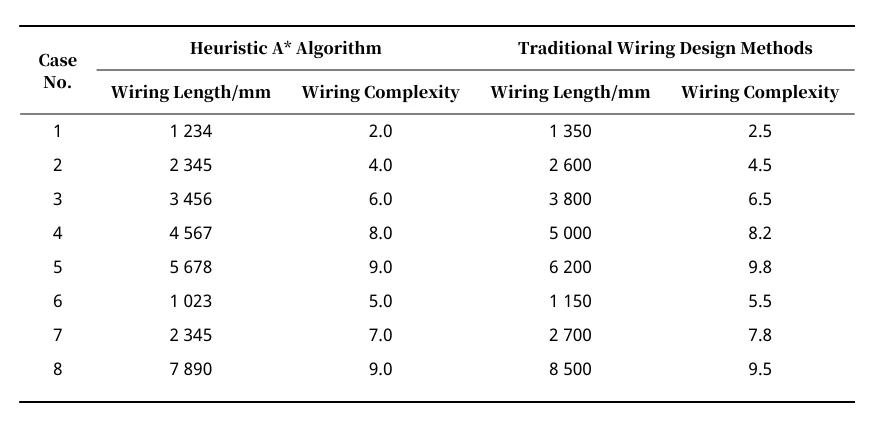
Table 3 Experimental Results
Table 3 demonstrates that the heuristic A* algorithm significantly reduces total routing length through intelligent search and optimization strategies.
In Case 5, the heuristic A* algorithm reduced routing length from 6,200 mm to 5,678 mm, showcasing its effectiveness in handling large-scale, highly complex routing designs.
Regarding routing complexity, the heuristic A* algorithm also performs exceptionally well.
By comprehensively considering various routing constraints—such as spacing constraints, current constraints, and high-frequency signal constraints—it generates more concise and efficient routing solutions.
This helps reduce circuit board failure rates while enhancing system stability and reliability.
In Cases 4 and 5, the heuristic A* algorithm lowered routing complexity scores from 8.2 and 9.8 to 8.0 and 9.0, respectively, proving its advantage in handling intricate routing constraints.
This demonstrates the significant advantages and potential of the heuristic A* algorithm in the field of FPC routing design.
Conclusion
This study on heuristic A* algorithm-based optimization for flexible circuit board routing has successfully introduced a novel optimization approach and methodology to the field of FPC routing design.
Leveraging its robust search capabilities and optimization performance, the heuristic A* algorithm demonstrates notable advantages when addressing complex and dynamic routing constraints and design requirements.
Looking ahead, ongoing algorithm refinement and expanded application scenarios will drive further innovation and breakthroughs in FPC routing design, propelling continuous advancement in the electronic device manufacturing industry.
Author: SU Hong-chang, QUAN Hai-yan
References:
- [1] Practical Design Guidelines for Flex. https://www-eng.lbl.gov/~shuman/NEXT/CURRENT_DESIGN/TP/MATERIALS/Flex_Design_Guidelines.pdf
- [2] An exhaustive review of the metaheuristic algorithms for search and optimization: taxonomy, applications, and open challenges. Kanchan Rajwar, Kusum Deep, Swagatam Das.
- [3] Resource allocation applied to flexible printed circuit routing based on constrained Delaunay triangulation. Bo Wang , Haoying Wu a, Mingyu Liu.
- [4] A Deep Reinforcement Learning Approach for Global Routing. Haiguang Liao, Wentai Zhang, Xuliang Dong, Barnabas Poczos, Kenji Shimada, Levent Burak Kara
- [5] Russell, Stuart J.; Norvig, Peter (2018). Artificial intelligence a modern approach (4th ed.). Boston: Pearson. ISBN 978-0134610993. OCLC 1021874142
- [6] Wang Fan, Wu Shiqian. A Template-Based and DCT-Based Registration Method for Flexible Circuit Boards [J]. Computers and Modernization, 2021, 16(10): 57-62.
- [7] Delling, D.; Sanders, P.; Schultes, D.; Wagner, D. (2009). “Engineering Route Planning Algorithms”. Algorithmics of Large and Complex Networks: Design, Analysis, and Simulation. Lecture Notes in Computer Science. Vol. 5515. Springer.
Free copyright